
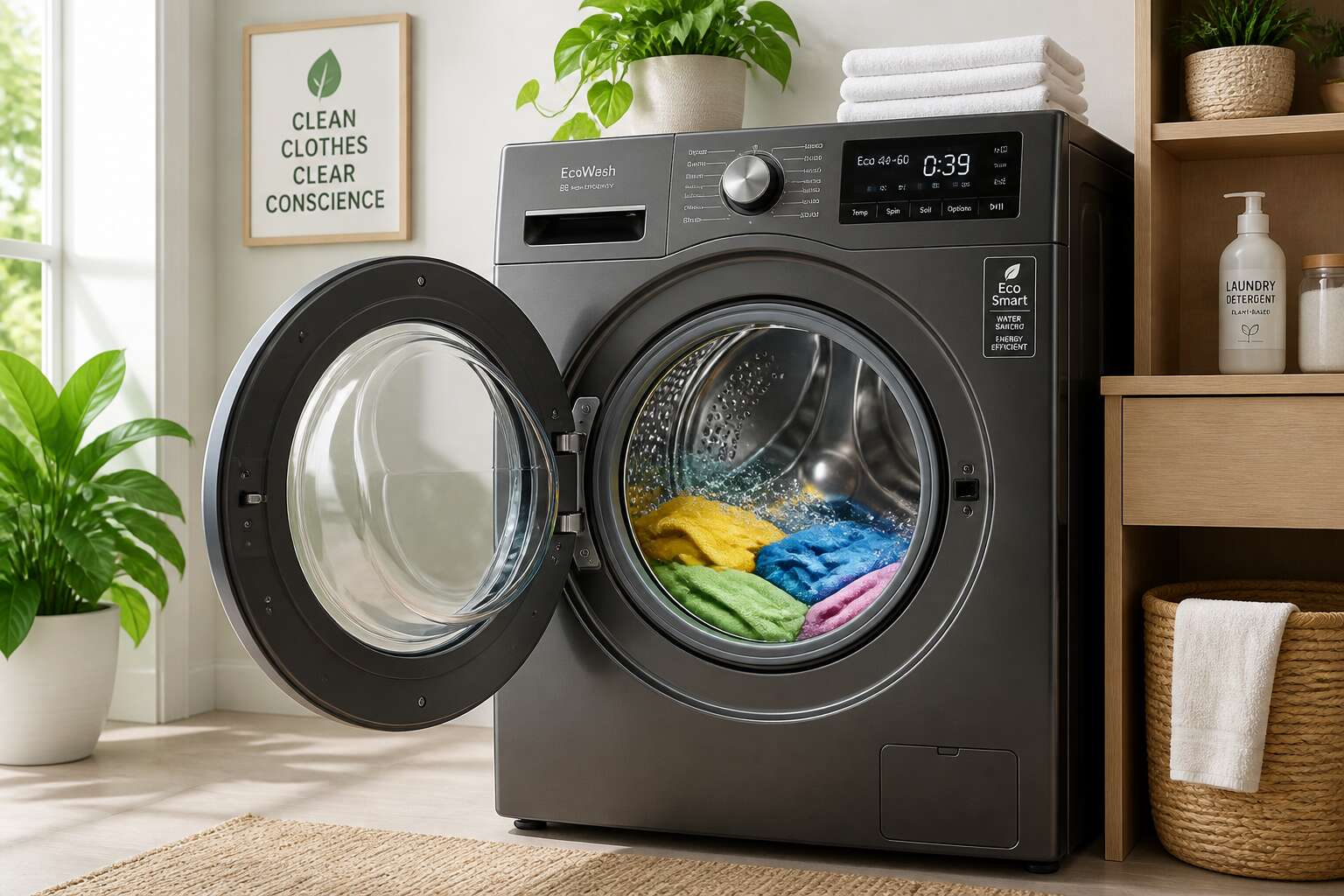
Understanding Water Consumption in Laundry Appliances
How Much Water Does a Typical Wash Cycle Use?
Most households never think about the litres flowing through their laundry room. A single wash can consume anywhere from 60 to 120 litres of water, depending on the machine type and cycle. In South Africa, where droughts are a recurring reality, understanding what is water saving in washing machine technology is no longer optional. It is essential for both your utility bills and the national grid.
The difference lies in the mechanics. Traditional top-loaders use a full tub of water to agitate clothes. High-efficiency front-loaders rely on a tumbling action with just enough water to saturate the fabric. This shift in design yields dramatic results. The average front-loader uses roughly 40 to 60% less water than its older counterpart. That translates to thousands of litres saved per household each year.
Consider the options available on the market today:
– Smart sensors that automatically adjust water levels based on load weight.
– Eco cycles that extend wash time but reduce water heating and consumption.
– Steam technology that uses vapour to refresh garments without a full rinse cycle.
These features are not gimmicks. They address the core question of what is water saving in washing machine design by targeting waste at the source. When you select a load size manually, you often overfill simply out of habit. A sensor detects the exact weight and adds only the required amount. The result is a cleaner wash with fewer resources spent. This precision is data-driven, not guesswork.
Shifting your laundry habits also amplifies the effect. Washing a full load instead of several small ones maximises the litres per garment. This alone can cut annual water usage by 20% or more. For households in water-restricted regions, choosing a machine with a high water efficiency rating directly supports municipal goals. It reduces the strain on reservoirs and treatment plants simultaneously.
Understanding what is water saving in washing machine technology empowers you to make a purchase that aligns with your budget and your environment. The upfront cost of a modern machine might be higher, but the payback comes through consistent, long term savings. Every cycle becomes a small act of conservation, turning a routine chore into a resource conscious decision.
Factors That Drive Water Usage Per Load
Inside the drum, water usage hinges on variables that shift with every load. The soil level selected, the fabric density, and even the local water chemistry in your province all influence the litres consumed. A linen shirt and a pair of denim jeans demand different treatment. The machine interprets these differences through sensors and manual settings, but the outcome is never uniform.
Consider what drives consumption:
- Soil level settings extend wash phases and add rinses.
- Fabric absorption rates alter the amount of water retained.
- Regional water hardness forces additional rinse cycles to clear detergent residue.
What is water saving in washing machine design, then, is the ability to read these signals and respond with precision. Older machines cannot. They flood the drum indiscriminately. Modern units adjust, measuring each variable and dispensing water accordingly. In a country where drought recurs with grim regularity, that precision matters.
The Difference Between Traditional and High-Efficiency Washers
Why Reducing Water Matters for Your Utility Bills and the Environment
One thousand litres of water can vanish in a single month of standard laundry habits. That is not a scare tactic, it is a simple calculation of volume against frequency. South Africans face constrained supply, so every cycle becomes a decision with real consequences.
The question of what is water saving in washing machine technology becomes immediate when you see the municipal bill. A conventional model might use 150 litres per wash. A high-efficiency unit can cut that figure dramatically, which translates to tangible savings every week.
The cost of water is only part of the equation. Heating water consumes electricity, and a hefty portion of that energy is wasted if the machine uses excessive liquid. You pay twice for the same load, once for the water and once for the energy to warm it.
The environmental impact is more abstract but no less significant. Each draw from the municipal supply places pressure on reservoirs, treatment plants, and delivery infrastructure. Reducing demand at the household level lessens the burden on a system already under strain from climate variability and population growth.
Water saving is not merely a feature, it is a fundamental design principle that affects operational efficiency. The definition of what is water saving in washing machine effectiveness is straightforward, it measures the volume of water required to achieve a specific cleaning outcome. Lower volume means less waste, which means more value. This is the core metric that should guide your purchasing decision.
Key Technologies That Help Cut Water Usage
Load Sensing and Automatic Water Level Adjustment
Most people never stop to consider the hidden cost of every laundry cycle. The average top loader in South Africa can easily consume over 100 litres of water per wash, a staggering figure when you consider the country’s ongoing water constraints. Understanding what is water saving in washing machine technology starts with the sensors that make intelligent decisions for you. These systems are not merely about using less; they are about using exactly the right amount.
Modern machines achieve this through two primary mechanisms: load sensing and adaptive water level adjustment. Before the wash even begins, the drum spins to distribute the clothes, allowing the internal processor to measure the weight and absorbency of the fabric. This data dictates exactly how much water enters the drum, eliminating the guesswork entirely.
Here is how these technologies work in tandem to protect your utility bill:
– Load Sensing: Uses motor torque to calculate fabric weight, ensuring a half load uses half the water.
– Adaptive Fill: Automatically stops the water inflow once the optimal level for the detected load is reached.
– Suds Management: Sometimes adds a rinse cycle or extra water only if excessive foam is detected, preventing waste.
The result is a dynamic process that responds to your dirty laundry rather than a fixed, wasteful program. For homeowners in Cape Town or Johannesburg, where municipal tariffs escalate with usage, this intelligence translates into tangible savings every week. Beyond the immediate financial relief, this precision prevents the over-saturation that leads to longer drying times, which means your tumble drier also works less. Ultimately, grasping what is water saving in washing machine design reveals it is simply a smarter, more responsive way to handle a daily chore.
High-Efficiency Wash Systems and Spraying Mechanisms
Picture the old washing machine as a blunt instrument, blindly filling a tub with water regardless of what lies within. High-efficiency wash systems, by contrast, are sculptors of water, chiselling away at grime with the least possible moisture. These machines employ specialised drum geometries and tumbling actions that lift and drop fabric through a concentrated pool of water, rather than drowning it. The result is a laundry experience where every drop is assigned a duty.
Spraying mechanisms take this precision a step further. Instead of relying on a deep bath, they recirculate water through fine nozzles, drenching the spinning clothes in a continuous, directed shower. This approach is particularly effective for lightly soiled loads, where a full immersion would be pure indulgence.
- Recirculation pumps filter and reuse water during the wash phase.
- Pressurised nozzles target specific fabric zones for intense cleaning.
- Low-water tumbling maximises friction between garments.
For the South African household, this means understanding what is water saving in washing machine technology reveals a shift from volume to velocity. The water you save is not merely banked for the next drought; it is repurposed into cleaning power. It is a quiet revolution, one that asks your machine to think in drops instead of buckets.
Steam Technology and Its Role in Reducing Rinse Cycles
Steam technology is the silent workhorse of modern water conservation. It does not simply wet clothes. It energises water molecules, allowing them to penetrate fabric fibres more deeply. This thermal boost means the wash drum requires far less liquid to achieve the same level of cleanliness.
For the South African household, this translates to a dramatic reduction in rinse cycles. Traditional machines flush away detergent with multiple, deep fills of water. A steam-equipped machine can achieve the same result with a single, targeted cycle. The steam lifts residual suds and particles from the weave of the fabric, leaving no soapy film behind.
The benefits go beyond simple conservation:
– Steam sanitises at higher temperatures without using extra water.
– It relaxes fabric wrinkles, reducing the need for a separate smoothing cycle.
– It activates detergent compounds more effectively, meaning you use less soap per wash.
This technology actively reduces the strain on your geyser and your municipal supply. When you ask what is water saving in washing machine, the answer increasingly points to steam. It converts thermal energy into cleaning power, substituting heat for volume. The result is a cleaner load with a smaller water footprint.
Recycling and Filtration Systems That Reuse Water
Water recycling systems capture the final rinse and direct it into the next cycle’s pre-wash stage. This closed loop can cut consumption by nearly a third on modern front loaders. Filtration units sit between the drum and the drain, trapping lint, hair, and detergent residue so the machine can circulate the same water repeatedly without compromising hygiene.
When you ask what is water saving in washing machine, these reuse technologies offer the clearest answer. They treat water as a resource to be cycled, not discarded. Some systems employ ceramic membranes, while others use centrifugal separators to keep the bath clean.
For South African households facing intermittent municipal supply, this matters immensely. A washing machine that reclaims its own water keeps laundry running during restrictions. It also softens the blow of rising tariffs, since every litre recirculated is one less litre drawn from your taps.
Smart Habits to Lower Water Consumption Without Changing Machines
Matching Cycle Selection to the Actual Load Size
Water waste often happens before you even press start. The question of what is water saving in washing machine boils down to one simple habit: matching the cycle to the actual load size. If you toss in three shirts and select a bulky or heavy-duty program, the machine fills accordingly, using far more water than necessary. It is a quiet, preventable drain on your monthly utility bill.
The good news is that you do not need a new appliance to fix this. Most modern machines offer a load size button or an automatic load sensing feature. You can also choose a shorter or eco cycle for lightly soiled clothes. These presets use less water while still delivering a clean wash.
– Use the quick wash for small, fresh loads.
– Select normal for mid-sized batches.
– Reserve heavy duty for towels or bedding.
Simply read the dial and adjust. Understanding what is water saving in washing machine means respecting the relationship between cycle length and load volume. A full drum requires more water, but a partial drum should never get the full treatment. Small adjustments in your daily routine lead to significant conservation over time. The water you save is the water your community keeps.
The Impact of Pre-Treating Stains Instead of Pre-Washing
Pre-washing a stained garment runs a full cycle before the actual wash, doubling water usage for a single item. Pre-treating takes a different path. Apply detergent directly to the mark, wait a few minutes, then wash normally. The machine runs once, not twice.
In practical terms, what is water saving in washing machine? In South Africa, where municipal water costs climb each year, this habit matters. A shirt with a sauce splatter does not need a preliminary soak. It needs targeted attention at the fabric level. That is what is water saving in washing machine truly means.
- Rub detergent into the stain with a soft brush.
- Let enzyme-based removers sit briefly.
- Check the stain after the main wash.
I have seen households cut consumption simply by skipping this extra cycle. The difference is one full run of water per stained load. Treat the mark, skip the soak, and the machine works exactly as it should.
Running Full Loads vs. Partial Loads and Efficiency Trade-Offs
South Africa’s rising municipal water tariffs make every litre count, yet a surprisingly simple habit often slips by unnoticed. The answer to what is water saving in washing machine often lies in how we fill the drum, not in upgrading the appliance itself. Running a machine with a half full drum can consume nearly the same amount of water as a full one, especially on automatic cycles that base their fill on load size rather than weight. The water is used regardless of whether you have three shirts or thirty, so the fixed overhead of a cycle remains constant.
This is where the efficiency trade-off becomes fascinating. If you run two partial loads a week instead of one full load, you are effectively doubling the water and energy expended per kilogram of fabric. The wear and tear on your clothes also increases, as they endure more agitation cycles. By holding out for a full drum, you maximise the utility of every litre and every kilowatt. For households across the country, this shift alone can slash monthly utility bills without sacrificing cleanliness.
To build a genuinely full load without overstuffing, consider these practical approaches:
– Collect items over a couple of days, but keep delicate fabrics separate to avoid damage during the spin cycle.
– Group similar materials together, such as towels with jeans, to achieve a balanced drum that distributes water evenly.
– Use the machine’s load sensor indicator, if available, to confirm you have reached the optimal capacity.
The real insight into what is water saving in washing machine is that water efficiency is a stewardship habit, rather than a hardware feature. Every time you pause to ask if the load is truly full, you are making a small, impactful choice. In a country where water security remains a pressing national concern, these everyday decisions ripple outward, reducing the strain on reservoirs and treatment plants. The machine simply follows your lead, rewarding a thoughtful approach with lower consumption and cleaner results.
How to Use Delay Start and Eco Modes for Better Resource Management
Delay start offers a practical route to understanding what is water saving in washing machine. By shifting cycles to off-peak hours, you reduce strain on the municipal grid, while the water consumed remains constant. The deeper saving emerges when delay start pairs with eco modes, which extend wash times to lower temperatures and cut water volumes per cycle.
Eco modes rely on longer soak phases to achieve the same cleanliness with fewer litres. My own experience with these settings shows a measurable drop in monthly usage, especially for lightly soiled clothing.
- Set delay start for evening hours when water pressure is stable.
- Reserve eco mode for everyday loads, not heavily stained workwear.
Understanding what is water saving in washing machine means recognising that resource management flows from scheduling and cycle choices, not hardware alone. South Africans can trim consumption without replacing a single component.
Decoding Efficiency Ratings and Water Labels
Understanding Water Factor and Its Importance
In South Africa, where every drop counts, the question of what is water saving in washing machine technology is not just about environmentalism. It is about practical, everyday economics and responsible resource management. A water-saving machine fundamentally redefines how your laundry operates, moving away from the brute-force approach of filling a large tub. Modern engineering focuses on intelligent wash actions and precise water-flow control to achieve the same cleanliness with significantly less volume during all cycles.
This efficiency is achieved through a combination of smart sensors and eco-friendly wash programs. The appliance actively weighs your laundry at the start to determine the exact water level needed, rather than assuming a maximum load every time. Furthermore, advanced spray systems and specialized drum designs ensure clothes are thoroughly soaked and rinsed using a fraction of the water, making water saving in washing machine operation a true fusion of technology and conservation.
Comparing Energy Star Certifications and Water Consumption Data
Energy Star certifications offer a starting point, but the sticker itself holds deeper intelligence. South African shoppers must read the annual water consumption data critically, not merely glance at the star count. That labelled figure in kilolitres represents metered reality, converting abstract efficiency into municipal billing consequences.
Consider the comparative breakdown when evaluating different models:
– Check the disclosed litres per cycle, not the marketing language around drum size.
– Verify whether the certification reflects the full washing programme or only an economical one.
– Match the consumption figure against your household’s actual laundry frequency.
This decoding reveals what is water saving in washing machine technology truly costs on your statement. The water factor number, combined with the certification year, permits sharp assessment before you commit to a purchase decision in any South African appliance retailer.
What the Numbers on the Energy Guide Label Actually Mean
The Energy Guide label on a washing machine demands attention, but most shoppers scan only the star rating. That number in litres per cycle is the decisive figure. It represents the measured volume per wash, not a hopeful estimate. Yet the label often reflects an idealised programme, one with light loads and perfect water pressure, not your chaotic household!
The figures that deserve your scrutiny:
- Litres per cycle under standard test conditions.
- Water factor, which directly answers what is water saving in washing machine technology.
- Certification year, which shows whether the data keeps pace with current municipal billing.
South African buyers can use these numbers to project monthly usage. A label quoting 40 litres will climb past 50 when you factor in hard water, bulky loads, or your habit of adding an extra rinse. Understanding what is water saving in washing machine requires comparing the sticker against your actual laundry routine, then choosing a model whose real-world consumption matches your budget.
Common Myths About Low-Water Washers and Cleaning Performance
Efficiency ratings on new machines tell a story that starts well before the drum spins. The water factor number, when paired with the litres per cycle, reveals what is water saving in washing machine technology in a way that star ratings cannot. A machine that uses minimal water while maintaining soil removal is the goal, but the label only shows laboratory conditions.
A common myth insists that low-water washers leave detergent residue and dirt behind. Modern machines counter this with recirculation systems that saturate fabrics repeatedly with a fraction of the water. The washing action changes, not the outcome. Understanding what is water saving in washing machine means recognising that less water does not mean less clean.
For South African households facing municipal water restrictions, this makes the efficiency rating a practical tool, not a marketing flourish.
Consider these points when comparing labels:
– Compare the water factor, not just the litre figure.
– Check the certification year to ensure the data is current.
– Match the rating to your real load sizes.
The label is a starting point. How the machine handles your actual laundry is the real test.
Choosing the Right Washer for Maximum Water Savings
Front-Loaders vs. Top-Loaders: Which Saves More Water?
When you’re deciding between a front-loader and a top-loader, the answer to what is water saving in washing machine often comes down to the machine’s core design. Front-loaders use a horizontal drum that tumbles clothes through a small pool of water, which is incredibly efficient. Top-loaders, especially those with a central agitator, need to fully submerge your laundry, demanding significantly more water for every cycle.
Here’s the thing: the difference is not minor. A standard top-loader can use upwards of 40 gallons per load, while an efficient front-loader typically uses just 13 to 20 gallons.
– Front-loaders: Higher upfront cost, but lower water and energy bills.
– Top-loaders: Cheaper to buy, but more expensive to operate over time.
Even high-efficiency top-loaders without an agitator, which use a wash plate, still lag behind their front-loading counterparts. If your primary goal is conservation, the choice is clear. Although front-loaders require a bit more bending to load, the water savings are substantial. That said, if you have mobility issues, a modern top-loader might be the practical pick for your home.
Key Specifications to Look for in a High-Efficiency Model
In a country like South Africa, where municipal water restrictions can reshape daily routines, the question of what is water saving in washing machine becomes more than a curiosity. It is a matter of household resilience. Choosing the right washer requires reading the specifications with intent, not just the sticker price. When you inspect a model, look closely at the wash basket volumes and the efficiency of its spray arms. A machine with narrow trommel cavities uses less water to achieve the same cleaning action, especially on delicate fabrics.
Here are a few specifications worth examining before you commit:
- Pause-and-pour features that allow you to interrupt cycles for fabric softener without an extra rinse
- Basket baffles designed to lift heavy cotton loads while using minimal liquid
- Variable spin speeds above 1400 RPM, which extract moisture and reduce dryer reliance
The quieter truth of what is water saving in washing machine is that rinse performance often matters as much as wash performance. Look for models with two-stage rinse systems that stagger the final flush. That precision preserves water pressure without sacrificing detergent removal.
The Role of Drum Capacity and Sensor Technology
Drum capacity shapes how much water a cycle truly needs. A spacious drum invites overloading, which forces the machine to compensate with extra flushes. A smaller drum, matched to your weekly laundry volume, keeps water volume proportional to each load. Sensor technology refines this further by measuring fabric weight and moisture content before the drum fills. That data tells the machine exactly how much liquid to release, no more, no less.
What is water saving in washing machine? It is the result of this interaction between physical volume and digital feedback. Capacitive sensors detect load imbalance and adjust water flow mid-cycle. This prevents the wasteful habit of topping up a partially filled drum. South African households, especially those on municipal restrictions, gain the most from selecting a drum size that matches their actual laundry patterns, not aspirational capacity.
Consider how these elements interact:
- Drum diameter sets the ceiling for efficient washing, while sensors set the floor for water volume.
- Pressure transducers monitor water levels in real time, allowing mid-cycle corrections.
- Variable fill logic adapts to changing water pressure during load-shedding hours.
Considering the Long-Term Savings of a New Appliance
In a country where every kilolitre carries the weight of municipal restrictions, the choice of appliance becomes a statement of foresight. When you ask what is water saving in washing machine, the answer begins with the machine you wheel into your laundry room. The selection process determines your household’s consumption footprint for the next decade, far more than any single cycle setting could.
A high-efficiency washer with a low water factor is not a luxury; it is a shield against erratic water pricing and seasonal scarcity. South African homeowners often overlook that the initial purchase price is merely the threshold, while the operational cost of water and electricity accrues silently every week. Investing in a model with advanced sensor arrays, even if the sticker price stings, often pays for itself within two years of regular use.
When evaluating a new machine for water savings, look beyond the promotional claims and examine these tangible attributes:
– A water factor of 6.0 or lower, indicating litres used per kilogram of laundry.
– Direct drive motors that fine-tune drum movement to minimise water splashing and waste.
– A dedicated eco cycle that extends wash time but reduces water and heating energy.
– Spin speeds above 1400 RPM, extracting more moisture so the dryer works less.
The long-term savings of a newer model are compounded by reduced strain on your geyser and plumbing system. Older machines with mechanical timers lack the ability to adapt, forcing a fixed water volume regardless of the load’s true weight. The newer generation of washers treats water as a precious currency, spending it only where the fabric demands. This is the true definition of what is water saving in washing machine, a systemic efficiency that protects your budget and the national grid simultaneously.

0 Comments