
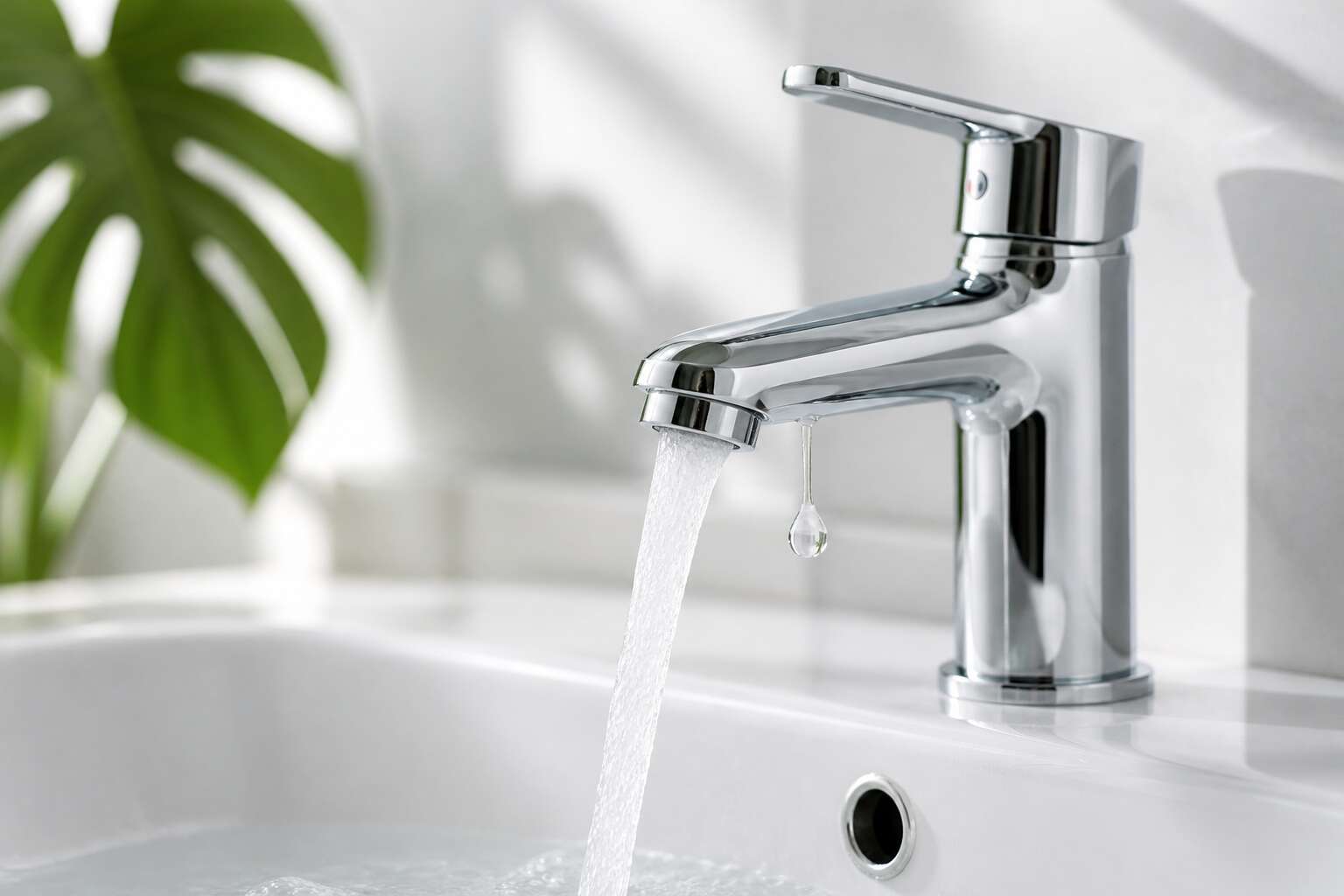
Understanding Water-Efficient Tap Technology
How low-flow aerators reduce water use
Most people never inspect their tap nozzle. Yet the small aerator inside determines how much water flows out. Low-flow aerators work by mixing air into the water stream. This reduces the volume while keeping the pressure steady. In practice, you get a comfortable spray without waste.
So what are water saving taps? They are taps with these aerators built in, or installed later. I retrofitted mine and immediately noticed the meter turning slower. That was a pleasant surprise.
- Ordinary taps flow at 12 to 15 litres per minute.
- Aerated taps flow at 6 to 8 litres.
The difference is enormous for a dry country like South Africa. This small device deserves more attention. It really adds up over time!
Flow rate ratings and regulatory standards
South Africa’s plumbing code is unforgiving. SANS standards dictate maximum flow rates for new installations. That is where the question “what are water saving taps” gets a definitive answer. They are fixtures that comply with measured benchmarks! Flow rate ratings are precise. A tap is tested at a specific pressure, typically 100 kPa. The result is a number in litres per minute. Anything below 9 L/min generally qualifies as water efficient in our context. Regulatory bodies enforce these limits on new builds and major renovations.
– A single star rating often allows 9 to 11 L/min.
– A premium rating must stay under 6 L/min.
These numbers matter. They are the legal difference between a standard fixture and a true saver. My own retrofit met municipal requirements at 7.5 L/min. Knowing the rating is essential. Understanding the SANS standard behind it prevents costly installation failures.
Pressure-compensating mechanisms explained
Pressure compensating mechanisms react to fluctuating water pressure in your pipes, delivering a steady flow whether the municipal supply surges or weakens. This differs from a simple aerator, which mainly adds air. A flexible diaphragm narrows the internal opening as pressure climbs, throttling the stream before it becomes wasteful.
- Maintains a constant flow rate across varying pressures.
- Prevents water hammer and reduces strain on pipe joints.
- Prolongs the lifespan of internal washers and seals.
So, when someone asks what are water saving taps, the answer includes this internal intelligence. My own bathroom tap uses a pressure compensating cartridge, and the consistency is noticeable every morning!
Sensor and automatic shut-off features
Think about the daily rituals that consume water without a second thought. A dripping tap left slightly ajar, a busy kitchen sink, or the absent-minded moment when a tap runs while someone searches for soap. These small losses accumulate into significant waste. Sensor technology addresses this human error directly, using infrared or proximity sensors to detect when hands or objects are present. Water flows only when needed, and ceases the moment the sensor loses sight of its target.
Automatic shut-off mechanisms take this concept further by enforcing a strict time limit on water flow. These systems cap each cycle at a predetermined duration, often around 60 seconds, ensuring that even a forgotten tap never becomes a flooded basin. This feature proves invaluable in public restrooms and commercial kitchens where high traffic demands a reliable, hygienic solution. When someone asks what are water saving taps, the answer increasingly points to these intelligent systems rather than simple fixtures.
The practical benefits extend beyond conservation alone. Sensor taps reduce contact with shared surfaces, limiting the spread of germs in high-traffic environments. They also protect the plumbing infrastructure from the wear caused by careless handling. Consider the advantages that make these systems stand out:
– Eliminates the risk of leaving a tap running overnight.
– Provides hands-free operation in accessible facilities.
– Reduces maintenance costs associated with broken handles and worn valves.
South African homes and businesses face unique water supply challenges, making this technology particularly valuable. Municipal water restrictions and periodic supply interruptions demand efficiency from every fixture. By installing sensor-equipped taps, property owners gain a dependable layer of control over their consumption. This raises the question about what are water saving taps in a modern context: they are precision instruments that respond to immediate presence, not just passive flow restrictors. The intelligence embedded in these designs ensures that every drop serves a purpose, turning a simple bathroom fixture into a guardian of a finite resource.
Common misconceptions about low-flow performance
Let’s face it, the phrase “water saving tap” conjures an image of a sad, pathetic trickle that couldn’t rinse a razor blade, let alone a dinner plate. This is the lingering ghost of the 1990s, when eco-friendly meant sacrificing pressure for principle. Yet the current reality is almost comically different. The modern fixtures are so adept at mimicking a full-bore deluge that you might check your municipal bill for errors, convinced they’ve undercharged you.
The secret to this sleight of hand lies in the engineering of the aerator and the flow path. Instead of merely throttling the supply like a plumber with a grudge, these taps inject air into the stream. The result is a bubbly, voluminous spray that feels heavy and forceful on your hands, while using a fraction of the water. It is the plumbing equivalent of a magician’s distraction, a clever bit of physics that fools the tactile senses into believing they are getting more than they actually are.
Another common misconception is that these installations are an all or nothing affair, leaving you with zero control. In reality, most high quality units offer adjustable flow rates, allowing you to toggle between a gentle stream for washing and a more vigorous spray for filling a kettle. Consider what these systems actually manage to achieve:
– They maintain sufficient pressure even in low pressure municipal systems.
– They reduce the volume of hot water wasted, which lowers energy demands.
– They prevent splashing, as the aerated stream is more cohesive.
For the sceptic, the proof is often in the utility bill, but the more immediate proof is in the physical sensation. A well designed device does not promise less; it promises the same result with less waste. This is the crux of the modern answer to what are water saving taps. They are not about deprivation. They are about efficiency that is perceptible, not punitive. Once you feel that solid, air-infused spray, the old fear of a weak dribble becomes a historical anecdote, not a practical concern. In a country like South Africa, where every litre counts, that kind of clever deception is exactly the kind of smart investment we all need.
Key Components of Water-Efficient Tap Fixtures
Aerators and laminar flow inserts
Now we open the tap’s inner chamber to see where true efficiency is born. The humble aerator sits at the mouth of the spout, a small cylinder with a mighty purpose. It forces the water through a series of precision-engineered mesh screens, breaking a solid stream into hundreds of tiny droplets. This process entangles the water with air, creating a softer, fuller spray. You get the same wetting power with a fraction of the volume, because each drop is given more surface area to do its job. A laminar flow insert works differently; it straightens the water’s path instead of mixing it with air.
This clarity serves a distinct need:
- It produces a crystal-clear, bubble-free stream.
- Splashing is reduced by limiting the turbulence at the point of impact.
The resulting stream looks heavier than it is, performing ideally for medical settings or filling pots where air bubbles might cause confusion. We often forget that the metal fixture is merely a vessel; the internal geometry dictates the performance. When you understand these mechanical hearts, the silent question of what are water saving taps becomes a conversation about intelligent design rather than mere restrictions.
Cartridge valves and precision controls
Inside the tap’s body lies the cartridge valve, a quiet sentinel that decides how much water escapes your command. Precision controls, often ceramic discs, grind against each other with surgical exactness. A quarter turn can throttle flow from a trickle to a torrent. These components answer what are water saving taps with a simple truth: efficiency lives in the mechanism, not the fixture. When the cartridge wears, the entire tap betrays its promise. But a well-machined valve holds firm for decades. The hand that turns it feels the difference immediately. That feedback, tactile and immediate, is the heart of conservation.
Eco-click and tactile flow indicators
I have watched hands hover over these taps in old Cape Town kitchens. The eco click cartridge answers that moment of doubt with two thresholds. A gentle press releases a thin stream, enough for rinsing a razor. A firmer press opens the full bore, and the tactile resistance beneath your fingertip changes. That change is the flow indicator speaking! It tells you, without a screen or sound, how much water you are about to commit.
In a country where drought recurs in our national story, these small physical conversations matter. They answer what are water saving taps with a language older than digital: touch.
- Eco click mechanisms offer two distinct flow positions
- Tactile indicators use resistance shifts to signal consumption
- The hand learns restraint faster than the mind
I have seen this pattern across new builds in Johannesburg and renovations in Durban. The fixture becomes a teacher. For the resident still wondering what are water saving taps, the lesson is already pressed into their palms.
Durable finishes and corrosion-resistant materials
The true answer to what are water saving taps often hides inside the valve, but the outer shell dictates how long that inner efficiency survives. In coastal regions like the Western Cape, saline air attacks chrome and steel with relentless precision. A tap that saves water but corrodes within two seasons is merely a delayed leak.
High grade brass bodies with a PVD (Physical Vapour Deposition) finish resist the micro abrasions that create footholds for grime and oxidation. These layers are molecularly bonded, not painted on. They survive the harsh chlorine and mineral content found in municipal supplies across Gauteng, where water hardness scales up internal parts quickly. The fixture’s longevity depends on this metallurgy. A ceramic disc cartridge, housed inside a corrosion resistant body, outlasts rubber washers that perish and drip.
– PVD coated surfaces maintain their structure against abrasive cleaning agents.
– Brass or stainless steel internals prevent dezincification, which weakens metal over time.
– Anti scale mechanisms on the spout reduce mineral buildup without chemical treatment.
The material choice influences the flow path over decades. When a buyer asks what are water saving taps, the answer includes the absence of corrosion induced leaks. A tap that cannot rust away its efficiency keeps its flow rate honest for longer, making the initial specification a direct contributor to long term water conservation.
Compatible mounting and installation hardware
A tap’s clever internals mean nothing if the unit cannot sit properly on your basin or countertop. The hidden architecture of compatible mounting and installation hardware determines whether a water saving fixture settles flush, seals cleanly, and survives the vibrations of daily use. A wobbly base invites micro gaps, which lead to seepage behind the wall and a slow, silent waste that defeats the purpose of the aerator up top.
The substrate matters as much as the valve. Modern basins in South African homes range from thin porcelain to thick granite, each demanding a different shank length and fixing nut. A tap with universal mounting options adapts to these variations, allowing a secure fit without shims or makeshift padding. Brass tails with threaded ends offer stability where plastic components might crack under torque.
– Check whether the tap includes flexible inlet hoses with standard 15mm connections, as many local installations require them.
– Confirm the thread pitch matches your existing water supply, or you will face a costly adapter hunt.
– Consider the depth of your basin ledge, since a shallow surface may reject a tap with a tall base plate.
Installation hardware also affects long term water efficiency. A properly seated tap prevents the pressure compensated flow mechanism from being compromised by lateral strain. When a tap hangs crooked, the cartridge wears unevenly, leading to drips that mock the low flow insert. Secured mounting also protects the PVD finish from scratches caused by repeated adjustment attempts.
The best fixture bridges intention and reality through thoughtful engineering. It anticipates the quirks of South African plumbing, where old galvanised pipes meet new copper lines. A tap with robust mounting gear, compatible with a range of installations, becomes a permanent guardian of every litre. When a homeowner asks what are water saving taps, part of the answer lives in the fittings that hold the entire system in honest alignment, ready for years of contained flow.
Types of Water-Efficient Taps for Different Spaces
Basin taps for bathrooms
Bathrooms are where we confront our daily rituals, yet few consider the mechanics behind the stream. Water efficiency here is not a compromise; it is a study in precision. Basin taps for bathrooms are designed for short, frequent use, which makes their engineering a unique challenge. The goal is to deliver a satisfying flow for handwashing without the wasteful surge that older models exhibit.
For the master ensuite, a single-lever mixer offers convenient temperature control, while a powder room might benefit from a simple, two-handle design that encourages a shorter run time. The choice often comes down to the user’s patience and the tap’s response time. A slower, deliberate flow can be more effective than a fast jet that splashes. In South Africa, where water pressure can fluctuate dramatically between municipalities, the internal cartridge becomes the silent hero, moderating the stream.
Consider the practical differences when selecting for various spaces:
– A deck-mounted basin tap is easier to install on existing vanities.
– A wall-mounted model can free up counter space, but requires plumbing alterations.
– A tall, gooseneck design makes filling a basin or washing hands comfortable.
– A short, angular tap suits cloakrooms and compact spaces.
These variations do not change the fundamental principle of what are water saving taps, but they do affect how effectively that principle is applied. The interaction between the tap’s height and the basin’s depth is crucial; it prevents water from bouncing off the porcelain and onto the floor. Ultimately, the best basin tap is the one that feels intuitive, encourages a brief usage cycle, and operates quietly under the duress of local supply conditions.
Kitchen mixer taps with spray modes
Nearly a third of South Africa’s municipal water is lost before it ever reaches a home. The kitchen tap, however, is where you feel that loss most acutely. This is where a mixer tap with a spray mode proves its worth. The core question of what are water saving taps is answered by the interface you use daily, not just the hidden cartridge. The spray function is a practical tool for rinsing produce or cleaning stubborn pots without flooding the basin.
The toggle mechanism is the critical feature. It switches between a concentrated stream and a wider spray pattern with a simple press. This design allows you to shift from a deep fill to a gentle rinse instantly. The pause lever is another simple feature that halts the flow entirely while you scrub or scrape, preventing those idle seconds of wasted water.
Common spray configurations include:
– Pulsating spray for dislodging food residue.
– A wide, angled fan for washing down surfaces.
– A focused jet stream for filling pots quickly.
A pull-down hose extends your reach to every corner of the sink. A pull-out model is shorter and suited to smaller vanities. The real innovation, though, is the flow rate. Many modern mixers combine the spray head with a flow stabiliser that maintains a steady, efficient output even when pressure drops during peak evening usage. I’d argue the spray mode changes your relationship with the sink entirely; you begin to use water with intent rather than habit. That shift in behaviour is the true meaning of what are water saving taps.
Sensor-operated taps for commercial washrooms
The commercial washroom is a theatre of silent, relentless waste. Every unmonitored basin tap in a Johannesburg office park or Cape Town mall is a small, recurring betrayal of the municipal supply. Sensor-operated taps are the mechanical antidote to this daily leakage. They replace the instinctive, forgetful hand with an infrared eye and a solenoid valve, cutting the flow the moment your palms withdraw. This single action removes the human error component from the equation of what are water saving taps.
The true value emerges in high-traffic spaces where conventional handles are left running. The system registers presence with an infrared beam and delivers a timed, often pre-set flow. It is a curt transaction, and precisely because of this brevity, it saves significant volumes of water. The flush of a public toilet and the short burst from a sensor tap represent the same principle: water is rationed by necessity, not by mood.
Here is what distinguishes the practical implementations for different environments:
1. A single-hole basin tap with an integrated sensor for a compact vanity.
2. A deck-mounted model with a separate control box that is often hidden beneath the counter.
3. A battery-powered unit that suits remote or temporary installations where wiring is impractical.
4. A hardwired unit for heavy-duty usage in stadiums or transit stations.
The mechanical reliability of these taps is the deciding factor, not the novelty. A poorly mounted sensor in a public restroom causes the same irritation as a dry hand dryer. The answer to what are water saving taps, in this context, is a system that reacts faster than a human can forget.
Thermostatic and dual-handle designs
Temperature hunting wastes more water in South African bathrooms than most homeowners realise. Each moment spent nudging a handle toward the perfect warmth sends untreated litres down the drain. Thermostatic and dual-handle designs address this directly, offering two different answers to what are water saving taps.
Thermostatic taps hold a preset temperature regardless of pressure fluctuations. The user sets the desired heat once, then uses a single lever for volume. This suits:
- Guest bathrooms where users are unfamiliar with the plumbing.
- Family homes with young children who need constant, safe temperatures.
- Hotel ensuites where efficiency must remain unnoticed by the guest.
Dual-handle taps take the opposite approach. They force a deliberate act: turning the cold knob, then the hot knob, then adjusting. This mechanical friction slows the user down and reduces careless running water. What are water saving taps in this context are fixtures that make waste inconvenient rather than automatic.
Outdoor and utility tap options
Outdoor and utility taps show what are water saving taps in places where nobody watches the flow. A garden tap left open while a bucket fills wastes more water in one morning than a leaky indoor fixture does in a week. Self-closing spring taps in staff washrooms and workyards shut off the instant the handle is released. For hose connections, a compression-fitting tap with a trigger nozzle stops waste between sprays. Lockable outdoor taps prevent unauthorised usage, a practical concern on shared South African properties. The hardware choices are simple:
- Brass hose bibs with vacuum breakers protect the supply while limiting flow.
- Key-operated taps restrict access to designated users.
- Paddle-handle taps show open and closed positions at a glance.
These fixtures reduce waste through physical design, not household reminders.
Wall-mounted and deck-mounted configurations
To answer what are water saving taps in physical terms, look at the mounting configuration first. Wall mounted taps attach to the wall above the basin, which opens up counter space and simplifies cleaning. Deck mounted taps bolt through the sink or countertop, a common choice in home bathrooms where existing holes already exist.
Each configuration changes how water efficiency is achieved. Wall mounted models often include longer spouts that direct water precisely, reducing splash and waste. Deck mounted units rely on the same internal cartridge technology but may need a taller gooseneck to clear the basin edge.
- Wall mounted taps suit shallow basins where drop clearance is tight.
- Deck mounted taps fit standard three hole sinks without structural changes.
The right answer depends on the space, not the hardware alone.
Benefits and Performance Considerations
Water and energy bill savings
In South Africa, where the cost of municipal water has climbed by double digits in several major metros, a household’s monthly outlay is a constant source of quiet anxiety. A slow-dripping tap is not just a nuisance; it is rand signs slipping down the drain, year after year. The financial logic of answering the question of what are water saving taps is simple, yet the impact is profound. By limiting the flow to a precise rate, these devices shave a significant portion off your consumption, and the savings appear directly in the bank account or on your municipal statement.
The interconnection between water use and energy is often underestimated, particularly when it comes to geysers. For every litre of hot water you do not run, you avoid paying to heat it. This dual reduction is where the true value of efficiency lies. A household might report a drop of up to 40% in water used for washing, which translates into a tangible decline in electricity usage, easing the burden of the evening peak load.
Beyond the meter readings, there is a quieter performance consideration that involves your plumbing infrastructure. Reduced flow means reduced strain on the geyser and copper pipes. This lessens the frequency of pressure-related wear, protecting your home’s circulatory system. However, the design of the tap must match the water pressure in your area. A tap rated for a high-pressure system will struggle to perform on a low-pressure gravity feed, so efficiency is only realised when the hardware aligns with your specific plumbing configuration. This alignment also reduces the risk of unexplained municipal charges that stem from undetected leaks, a common issue in older South African homes. In my experience, the certainty of knowing your tap is delivering a consistent, mandated flow rate offers a simple form of financial peace.
– Fewer litres used per minute directly lowers the water tariff charge.
– Less hot water drawn means a lower electricity bill from the geyser.
– Reduced volume cuts the cost of chemical treatment or septic system maintenance.
– Consistent flow prevents the waste that comes from overspray or splashing.
Ultimately, the frugality of a water saving device is measured not in the minutes of your day, but in the resilience of your budget against the steady rise of utility tariffs. It is a modest change with a compounding return, a quiet guard against the rising cost of living in a water-scarce country.
Environmental impact and conservation
When you ask what are water saving taps, the answer extends beyond your monthly statement. In a country where annual rainfall is unpredictable, every litre conserved is a small act of resilience. These taps reduce the volume of water drawn per minute, which eases the load on municipal reservoirs and delays the need for new dam infrastructure.
Performance considerations matter. A tap that works on a high-pressure system may underperform on a low-pressure gravity feed, so matching the hardware to your plumbing is essential! The environmental impact is direct: less water extracted, less energy used for treatment and pumping, and a smaller carbon footprint.
- Lower consumption reduces strain on rivers and aquifers.
- Efficient flow cuts the energy needed to heat water.
- Consistent delivery prevents wastage from overspray.
I have seen how the question of what are water saving taps becomes a question of stewardship. The savings are tangible, and the conservation is lasting.
User comfort and flow consistency
Ask anyone who has lived with a temperamental tap and they will tell you that consistency is a quiet luxury. Understanding what are water saving taps means recognising that their value is not measured in trickle down discomfort, but in a steady, reliable flow that does not punish you for being water wise. The best designs deliver a precise stream that feels generous, even when it is frugal. This matters when you are rinsing a blade of spinach or waiting for the kettle to fill.
The engineering must respect your home’s specific water pressure personality. A tap that is tolerant of fluctuating supply will not spit or stutter, ensuring your morning routine remains free of surprises. The experience is one of quiet control:
– A laminar stream that reduces splashing and keeps the basin cleaner
– A consistent temperature that does not waver as other appliances draw water
– A stable flow rate that makes daily tasks feel effortless and predictable
Using a tap on a well for irrigation needs, or on municipal lines with low pressure, changes what are water saving taps in practical terms. The joy comes from a fixture that offers dependable performance without demanding a change in how you live. When the water arrives at the same honest pace every time, the conservation becomes a seamless part of the day, a quiet habit rather than a conscious compromise. The physical feedback is reassuring, such as a simple tactile mechanism that confirms a gentle stream is active. This is where efficiency stops being a technicality and becomes a comfortable daily reality, one that respects both the resource and your peace of mind.
Maintenance needs and lifespan
To understand what are water saving taps, look past the initial flow reduction and consider the long game. A well built tap endures decades of use. Ceramic cartridges resist the abrasive minerals common in South African water supplies. The handle stays smooth and the flow stays predictable as the years pass. I have seen cheap fixtures fail within three years, while a quality unit from the same era still runs perfectly today.
Maintenance is modest. A periodic wipe of the aerator clears sediment. A quick check of the supply hoses prevents small leaks from becoming structural problems. The ritual is simple:
- Clean the aerator every few months
- Inspect washers and O-rings annually
- Tighten loose fittings promptly
Performance considerations centre on the quality of internal parts. A brass body with a chrome finish shrugs off corrosion. A plastic core will not. Ask about the cartridge and aerator material when choosing. These small components decide whether your fixture lasts five years or fifteen.
Compatibility with low-pressure systems
Water pressure in South African homes is a fickle dance partner. Some suburbs enjoy a vigorous surge, while others contend with a whisper-thin trickle. This variance is the crux when answering what are water saving taps in practical terms. A tap that merely restricts flow can become a frustrating drizzle in a low-pressure system, turning a simple hand wash into a test of patience. The best designs incorporate pressure compensation, a clever internal mechanism that maintains a steady stream whether the incoming pressure is high or low. Without this, a tap is simply a gamble.
The consequence of overlooking this compatibility is tangible. In a house with weak municipal pressure, a poorly matched aerator can churn the water into a frothy, spitty mess. It looks alive but delivers far less usable water, forcing you to linger longer, which undermines the entire conservation premise. Conversely, a well-calibrated unit ensures a laminar, clear flow even at lower pressures, preserving both the ritual and the resource. When you consider what are water saving taps, the real answer lies in this engineering, not just the marketing. I have walked into homes where the difference is night and day. The right fixture transforms a desperate trickle into a confident, consistent stream. Look for taps that explicitly state low-pressure compatibility and review the technical sheet for the minimum operating pressure. A quality unit will operate within a broad range, offering resilience against municipal fluctuations. It is the difference between a fixture that concedes to the infrastructure and one that masters it, delivering a shower of savings without sacrificing dignity or daily comfort.
Buying and Installation Guide
Checking flow rate and certification labels
The first decision in your water saving journey is often made in the quiet of a hardware aisle, and it is a choice that will echo through your monthly bills for years. It is wise to approach the selection of these devices with a certain level of scrutiny, for not all that glitters is gold, nor is every labelled fixture a genuine steward of the resource. When you are considering what are water saving taps, the physical evidence of their efficiency lies in the details etched upon their bodies.
You must become a detective of sorts, examining the certification labels with a critical eye. These markings are not mere decoration; they are a passport to guaranteed performance. A tap that claims efficiency should possess a heavy physical presence and a mechanism that feels robust to the touch. Before you hand over your hard-earned Rand, consider the specific requirements of your own household’s water pressure, as a mismatch here can lead to disappointment.
To ensure a proper installation, you might follow a simple sequence of checks:
1. Confirm the inlet thread size matches your existing pipework.
2. Check the flow rate rating printed on the box or the tap body itself.
3. Verify any local water restrictions or regulations are met.
4. Inspect the warranty terms for the internal cartridge.
Once the box is open, the installation itself can be a quiet ritual of patience and precision. Using a basin wrench to secure the fixture from below prevents the dreaded twisting of pipes. The final tightening should be firm, but not brutal, as overtightening a rubber seal can cause damage to the very threads meant to hold it fast. Remember that the plumbing in older homes can be a labyrinth of surprises, so keeping a spare supply of thread seal tape is a prudent measure.
In the end, understanding what are water saving taps leads you to this moment of physical connection between fixture and pipe. The real test lies in the turn of the handle, a small act that promises a future of lessened waste. The flow will speak for itself, a quiet testament to a choice made with both head and hand.
Measuring tap hole and supply requirements
The distance between your tap hole and the water supply valve can be the difference between a clean install and a frustrating search for extensions. A surprising number of South African homes have non standard basin dimensions, so measure twice. For what are water saving taps, the physical fit is as critical as the flow rate. Bring a calliper to the basin and record the hole diameter, then note the depth of the counter below. You also need the thread size of the existing supply pipe, often 15mm in local plumbing.
- Measure the tap hole diameter with callipers, not a tape measure.
- Confirm the centre distance between two holes for mixer taps.
- Check the available depth beneath the basin for the tailpiece.
A shorter spout might clear the basin edge but miss the water stream. Supply lines that are too short create tension on the valves. When you do buy, keep the receipt and the box, because returns are simpler when the dimensions are wrong. What are water saving taps without a proper fit? A leak waiting to happen.
Comparing aerated versus non-aerated flow
The day South Africa’s water regulations tightened, the choice between an aerated and a non-aerated tap stopped being about aesthetics. It became a plumbing decision. Aerated models inject air into the stream, which softens the spray and reduces splatter on shallow basins. Non-aerated taps, often called laminar flow, push a clear, solid stream of water. That clarity matters when you are filling a kettle or rinsing a blade.
For local homes, the differences show up in installation. Aerated units are forgiving with older supply pipes because the air creates pressure compensation. Non-aerated models demand consistent water pressure. If your geyser is on the roof and your municipality throttles supply at night, a laminar stream will run thin. The question of what are water saving taps becomes a matter of matching the device to your specific pressure profile. Consider this when you stand in the aisle:
– Check your existing water pressure with a gauge.
– Feel the tap’s internal mesh for aerator quality.
– Look for a flow straightener on non-aerated models.
– Compare the spout reach against your basin depth.
The hidden cost lies in replacement parts. Aerator cartridges need periodic cleaning from sediment, a common issue in South African borehole or municipal water. Non-aerated taps, being simpler, often last longer but splash at angles on shallow sinks. Both will cut your consumption drastically, but your comfort hinges on installation site realities. So, what are water saving taps if not a compromise between engineering and habit? You trade the full-force spray for a measured stream, or vice versa, and your water bill thanks you either way.
Professional installation versus DIY fitting
Let’s be honest: the installation is where the romance of a water saving tap meets the cold reality of your plumbing. Watching a professional fit a basin mixer with 15mm tails is, for many, a spectator sport. For the socket set owner among us, it is flirting with disaster. The decision between calling in a pro and doing it yourself rests on your comfort with the gritty details of your supply lines.
The do-it-yourself path appeals to the wallet and the ego. You save on callout fees and gain a sense of dominion over your geyser. But you also inherit the consequences of a leaking thread or a damaged o-ring. Consider your own skill set before you wield that adjustable spanner.
– Do you own a pipe wrench, or just a vague sense of optimism?
– Have you shut off the main water supply valve successfully before?
– Can you identify if your pipes are copper, galvanised, or PEX?
A professional installation, conversely, brings insurance and the quiet assurance of a warranty. They have the pressure gauges and the confidence to handle stubborn, old fittings. When you ask what are water saving taps, the answer often lies in the integrity of the installation. A plumber ensures the aerator and cartridge align correctly, which is the difference between a gentle mist and an accidental bidet experience. For most of the Republic, where municipal pressure can fluctuate with the mood of Eskom, paying for that expertise is a sound investment. The tap itself is only as clever as the person who bolts it to the wall.
Testing and adjusting flow after installation
Once the tap is bolted down, the real work begins. I always test the flow with the basin plug closed, because a loose aerator reveals itself in a spray pattern that defies expectations. Turn the handle to full open and listen for the hiss of air. That hiss means the pressure compensating mechanism is doing its job, not wasting water!
Adjusting the flow after installation is a matter of small turns. For what are water saving taps, the cartridge does the work. If the stream feels weak, check the supply stop valve. If it sputters, clean the aerator mesh. Here is my checklist:
- Check both hot and cold lines independently.
- Confirm the tap spout reaches the basin centre.
- Feel for temperature stability after ten seconds.
You need a thermometer and patience. A properly adjusted tap delivers a steady laminar flow without splashing. That is the sign of a successful installation.
0 Comments