
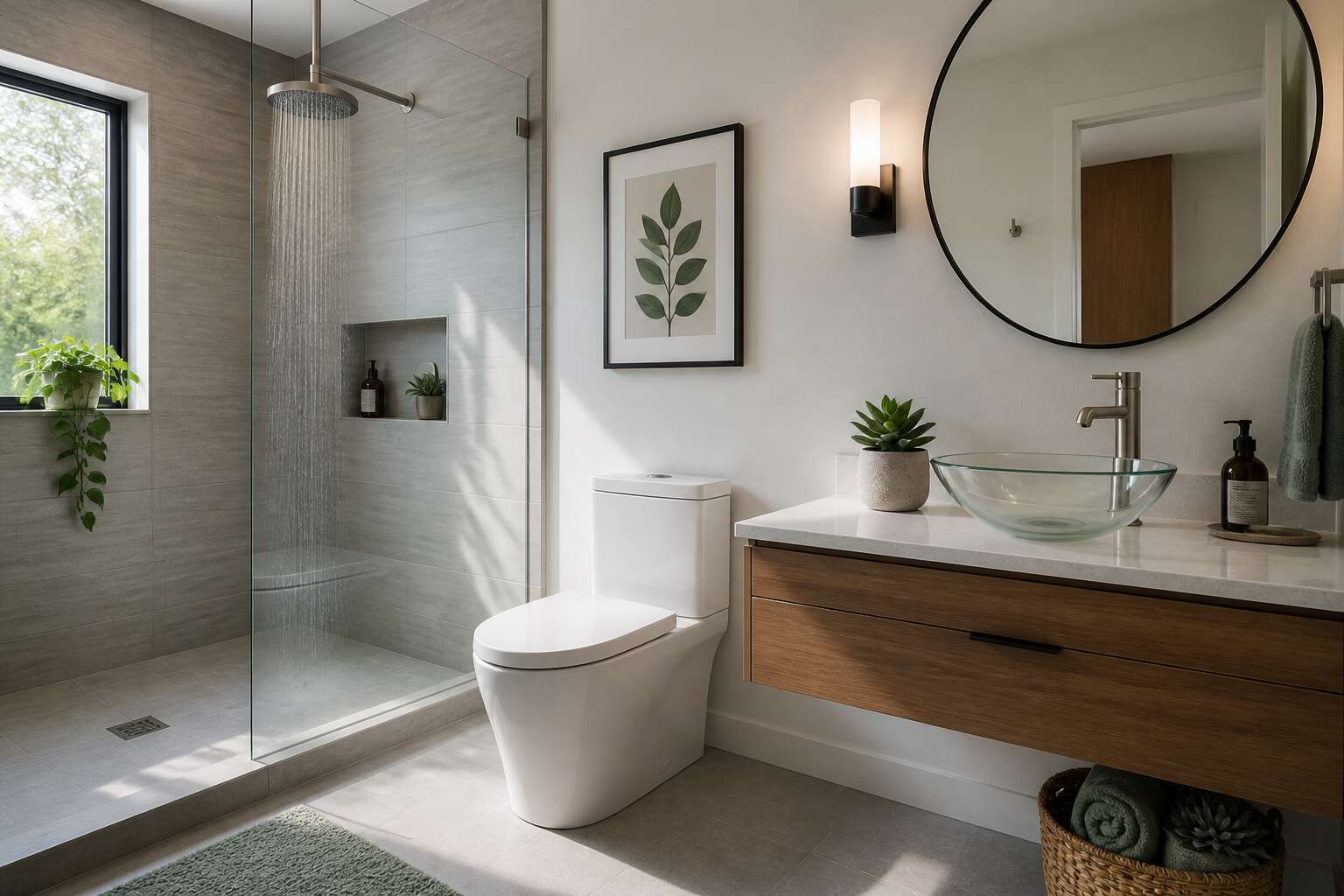
Understanding Water Efficiency Standards
What Does WaterSense Mean?
Most people assume a fixture that flushes works fine, until the water bill arrives. In South Africa, where supply is erratic and reservoirs drop, water efficiency standards are not a bureaucratic nicety. They are the difference between a functioning household and a dry one.
WaterSense is an American programme, but its logic translates globally. A WaterSense certified product uses at least 20 percent less water than a standard equivalent, without sacrificing performance. It is a label, yes, but it exists because someone measured the flow.
The programme covers several fixtures commonly found in bathrooms:
- Toilets that flush with 4.8 litres or less.
- Showerheads capped at 7.6 litres per minute.
- Faucets and aerators with a maximum flow of 5.7 litres per minute.
These numbers matter because they force manufacturers to engineer better products instead of cheaper ones. For anyone shopping for water saving bathroom fixtures, the WaterSense mark eliminates guesswork. You do not need to test the product yourself. The testing is already done. When water saving bathroom fixtures carry this label, the performance and the savings are already vetted.
Flow Rates and Gallons Per Minute (GPM)
Flow rate determines how much water leaves your tap each minute. In the plumbing industry, this is expressed as gallons per minute, or GPM, a unit that persists even in metric system countries. South African shoppers frequently see GPM stamped on imported fixtures, so understanding the conversion is practical, not academic.
One gallon equals 3.785 litres. I find this easier to grasp when applied directly: a showerhead rated at 1.8 GPM delivers nearly seven litres per minute. Multiply that by ten minutes and you have drained roughly seventy litres! The same calculation applies to basin faucets, where lower GPM ratings mean reduced municipal consumption.
Water saving bathroom fixtures occupy the lower end of the GPM scale, typically below 1.5 for faucets and below 2.0 for showerheads. When you compare water saving bathroom fixtures side by side, the GPM rating gives you a precise tool for judging which one conserves water.
How to Read Product Labels
Ignoring the label on a bathroom fixture wastes more than money, it wastes the very resource you intend to conserve. South African shoppers must locate the volumetric disclosure, a direct statement of GPM or litres per minute, alongside the certification mark from a recognized authority. For water saving bathroom fixtures, that flow rating should match the efficiency thresholds you have just studied.
- Confirm the certification body, whether SABS, WRAS, or equivalent.
- Read the flow rating at the maximum pressure, not the average.
- Look for the standard number, such as SANS 226 or EN 817.
Imported fixtures often arrive with multiple labels from their origin countries. The local regulatory approval matters more than any marketing claim. A label that lists a specific test standard provides verifiable proof of efficiency, so your selection rests on facts, not assumptions.
The Environmental Impact of Water Waste
South Africa’s water crisis is measured in years, not seasons. Day Zero was a warning, not a memory. Every inefficient fixture prolongs the national emergency. Water saving bathroom fixtures are the direct counter to this crisis, but only when they meet recognized efficiency standards.
Standards like SANS 226 and EN 817 translate conservation into data. They set maximum flow rates under controlled pressure and provide the certification mark that proves compliance. Without these benchmarks, efficiency is just a claim.
The environmental impact of water waste is immediate and cumulative:
- Energy use at treatment plants climbs with every wasted litre.
- Overloaded sewage systems discharge untreated water into rivers.
- Aquifer levels drop, forcing deeper and costlier drilling.
These consequences affect reservoir levels, agricultural output, and municipal budgets. Choosing certified water saving bathroom fixtures is a direct response to this measurable damage.
High-Efficiency Toilets and Urinals
Pressure-Assisted Toilets Explained
The flush doesn’t whisper. It roars. Air pressure builds inside a sealed tank, and when you press the handle, that pressure launches water into the bowl with violent efficiency. This is the pressure-assisted toilet, a core component of water saving bathroom fixtures. It clears waste using far less water than a gravity flush, because velocity does the work!
The mechanics are straightforward. Water enters the tank and compresses the trapped air above it. That stored energy releases in a burst. A typical pressure-assisted toilet uses 1.1 gallons per flush, while older gravity models often consume 3.5. For urinals, high-efficiency versions operate with as little as 0.125 gallons per flush, using infrared sensors or manual valves.
- The tank contains a sealed diaphragm.
- Water pressure compresses the air.
- The flush valve opens, releasing the charge.
These systems require less frequent maintenance than you might expect, though the upfront price runs higher. For a commercial restroom, the reduction in water usage and sewage load justifies the investment.
Waterless Urinals: Pros and Cons
One failed flush in a public facility is rarely about the hardware. It is about the accumulated assumptions we bring to the act. High-efficiency toilets challenge the notion that power equals consumption. A dual-flush model, common in South African commercial projects, offers a reduced flush of 3 litres for liquid waste and a full 6 litres for solids. The mechanism uses a larger trapway and a glazed surface to move waste efficiently without relying on sheer volume. These units, when paired with WaterSense certification, cut indoor water use by roughly 20% compared to standard models.
The shift is not merely environmental. It is operational.
Waterless urinals, however, demand a different kind of trust. They operate without a flush valve, relying instead on a sealant liquid that sits in the trap. Urine passes through the sealant and drains, while the barrier prevents sewer gases from escaping.
– The sealant cartridge requires replacement every 10,000 to 15,000 uses.
– Cleaning crews must use non-foaming chemicals to preserve the barrier.
– Mineral buildup in hard water regions like Gauteng can accelerate maintenance needs.
The savings are real, with each fixture saving over 150,000 litres annually. But the failure mode is silent. A neglected cartridge produces odour, and odour erodes public confidence faster than any water bill. For a facility manager, the choice between these water saving bathroom fixtures is a calculation about maintenance commitment, not just water volume. Municipalities across the Western Cape have adopted both technologies, yet the urinal demands a discipline that many sites cannot sustain. The toilet forgives neglect. The waterless urinal does not.
Choosing the Right Flush System
A facility manager in Durban weighs two distinct flush systems. The choice between high-efficiency toilets and urinals depends on occupancy rhythm as much as water volume. I have watched dual-flush HETs waste their 3-litre setting when users grasp the wrong button.
Sensor-equipped urinals with a 1.5-litre flush remove that human error entirely. That precision suits busy airports or stadiums, where hands-free operation trumps user education! Yet urinals demand dedicated drainage stacks, while toilets connect to standard waste lines.
Weigh the daily traffic: male restrooms with high turnover benefit from the urinal’s targeted flush. Mixed-use spaces often prefer the flexibility of the toilet. Both serve as water saving bathroom fixtures, but the real calculation shifts with retrofits and pipe routing.
Maintenance Tips for Low-Flow Toilets
Keeping water saving bathroom fixtures performing well requires attention to hidden components. A low flow toilet’s delicate flush valve can trap debris from older pipes in Durban’s hard water. Clean the inlet holes annually to prevent mineral buildup. Urinals with sensors have filter cartridges that clog with sediment; replace them before the flush pattern becomes erratic.
For low flow toilets, inspect the wax ring and fill valve regularly. A silent leak wastes more water than a visible one:
– Check the flapper every six months for warping.
– Wipe sensor lenses with a damp cloth to avoid false flushes.
– Use a descaler designed for ceramic to protect the glaze.
These small acts extend the lifespan of water saving bathroom fixtures and keep their savings consistent. When you maintain water saving bathroom fixtures properly, the numbers on your water bill reflect that diligence.
Smart Showerheads and Faucets
Aerated vs. Laminar Flow Showerheads
Some showerheads pretend to save water by spraying a mist that evaporates before it touches your skin. Aerated flow injects air into the stream, creating a fluffy but colder spray. You compensate by turning up the hot water, which defeats the purpose of your water saving bathroom fixtures.
Laminar flow pushes a transparent, uniform column of water. No air means the heat stays in the stream, so you need less hot water. Smart showerheads use sensors to pause flow during soaping, and smart faucets track real time consumption. These fixtures offer conservation and comfort in equal measure.
Consider what laminar flow provides:
- Consistent temperature across the spray.
- Reduced mist and evaporation.
- Cleaner appearance with no aeration hiss.
Sensor-Activated Faucets
Sensor activated faucets in South African homes can cut handwashing water use by up to 70%. The tap only flows when hands enter the detection zone, eliminating the running water that escapes while you reach for soap or scrub your palms.
Smart showerheads extend this principle into the bathing routine. Some models pause the stream when you step aside to lather and resume at the exact same temperature. Others connect to a phone app that maps your typical shower length and flags inefficiencies. The technology removes the need to fiddle with handles mid rinse.
- Infrared sensors respond in 0.3 seconds.
- Built in timers cap each shower at your preferred duration.
- Leak detection alerts arrive as phone notifications.
Every element works toward lower consumption without a drop in comfort. These water saving bathroom fixtures operate without demanding attention, so the morning routine never feels like a compromise.
Thermostatic Mixing Valves
A typical shower in a Gauteng home can send tens of thousands of litres of heated water down the drain each year, most of it while waiting for the temperature to stabilise or during those lost minutes of lather and rinse. Smart showerheads and thermostatic mixing valves directly address this waste without demanding a change in habit.
A smart showerhead tracks the flow and pauses it when you step away from the stream. The water resumes at the set temperature, so you never adjust the handle mid-shower. Some models integrate with a home automation system to log usage and flag anomalies. The technology is straightforward:
– Pause functionality triggered by movement sensors.
– Digital temperature display for instant verification.
– Usage metrics viewable on a connected phone app.
Thermostatic mixing valves handle the temperature control upstream. They blend hot and cold supply lines to a fixed output. If the cold water pressure drops, the valve compensates instantly. This prevents scalding, but it also saves water by eliminating the long, wasteful tuning period at the start of every shower. You set the dial once and the valve maintains the temperature, so there is no running water while you fiddle with handles.
These elements make up a central part of the water saving bathroom fixtures considered essential for a modern home. The return on investment is measured in the monthly water bill, but the real benefit is the quiet efficiency. It operates in the background, allowing the household routine to proceed undisturbed while usage drops.
DIY Water-Saving Shower Timers
Most water waste happens in the moments we do not notice. The two minutes spent scrubbing under a running shower, or the time lost adjusting a handle, add up to thousands of litres a year. A DIY shower timer addresses this with old fashioned accountability. A waterproof timer, mounted within reach, gives each shower a visible limit. You might start with ten minutes, then trim it to eight, then to six, without feeling deprived. The ritual becomes a quiet contest. Pair this with a smart faucet that tracks your sink usage, and you have a complete picture of daily consumption. The numbers worth tracking are simple:
– Total minutes per shower
– Litres used at the basin each day
– Weekly totals compared against the previous week
These water saving bathroom fixtures work because they make waste visible rather than imposing harsh restrictions. The result is a household that uses less water while barely changing its habits.
Retrofit Kits for Existing Faucets
The quietest rebellion in a South African bathroom begins with the hardware itself. A timer only reminds us of what the water is doing. A smart showerhead learns the household rhythm, trimming the flow at the elbow or the hip without a thought. It measures litres per minute and adjusts via a small pressure valve while you stand in the steam.
For the sink, a retrofit kit turns an old faucet into a reluctant miser. The aerator mixes air with the stream, reducing flow while keeping pressure. A small lever or sensor stops the run mid-scrub. You do not need to replace the whole tap. The existing chrome stays;you only swap the heart. In South Africawhere the dams draw low each summer, this kind of water saving bathroom fixtures is not a luxury. It is a lever against the empty season. The essential components smell like attention:
– a flow restrictor rated at nine litres per minute or less
– a thermostatic valve that holds temperature while reducing volume
– a pause button for the soap, the shave, the long stare at the window
Each part whispers its own small arithmetic, and the sums add up to thousands of litres saved per year. The old pipes groan, but they obey.
Greywater Recycling Systems
How Greywater Systems Work
In South Africa, where municipal water supply is often strained, the average household sends thousands of litres of lightly contaminated water into the sewer each year. A greywater recycling system intercepts this flow. It captures effluent from your basin or shower, passes it through a filtration media, and redirects it into your toilet cistern. This water is not potable, but it is perfectly adequate for a flush.
The mechanics are discreet. Wastewater gravity-flows into a holding tank, where solids settle. The water moves through filters before undergoing UV disinfection to neutralise microbes. The water is then pumped back up to the cisterns via a dedicated reticulation line.
- Diverter valves to isolate the source.
- Filtration media to remove hair and soap scum.
- UV disinfection to ensure safety.
These systems represent the definitive standard for water saving bathroom fixtures, offering a silent, automated answer to the country’s recurring droughts. For homeowners seeking comprehensive water saving bathroom fixtures, they are the essential upgrade. They require no behavioural change, only infrastructural intelligence!
Legal Considerations and Permits
Before installing a greywater system, South African homeowners must navigate municipal bylaws. Many local authorities require a permit for any alteration to your plumbing. This protects the public water grid from cross contamination.
I have seen homeowners assume that because greywater recycling is eco friendly, it is exempt. That is incorrect. The National Water Act governs reuse, and your municipality may demand an inspection.
- Submit your system design to the local authority
- Secure a plumbing permit before installation
This paperwork feels tedious, but it demonstrates that water saving bathroom fixtures comply with health standards. Approval is not granted to punish you. It is a mechanism to safeguard neighbours and the environment.
Simple Laundry-to-Landscape Setup
A laundry to landscape system is the simplest greywater entry point for a South African home. It diverts washing machine discharge into mulch filled basins around your garden. No pump. No filtration tank. Only a diverter valve, gravity, and a length of pipe.
A plumber reroutes the drain line and installs a 3 way valve. From there, 25mm pipe carries the water downhill to your chosen plants. Each outlet empties into a shallow basin filled with wood chip mulch. The mulch traps solids and allows beneficial bacteria to break down residue.
The order of work is straightforward:
- Mount the diverter valve on the washing machine drain.
- Lay pipe with a steady downward slope.
- Dig mulch basins around established trees and shrubs.
- Connect outlets and run a test cycle.
Keep the system clear of edible crops. Use detergents low in sodium and boron. This setup proves that water saving bathroom fixtures can work with the landscape, not against it.
Filtering and Storage Options
One bathroom sink produces roughly 40 litres of lightly soiled water each week. That is not waste; it is a resource awaiting a second act. Greywater recycling systems capture this runoff, filter it, and store it for irrigation or flushing. The elegance lies in the simplicity!
Filtering choices range from coarse mesh screens to compact bio-film units. Storage demands equal attention. Greywater turns anoxic when held too long, so tank capacity must match your household’s weekly flow.
- Sediment filters trap hair and lint before they foul the tank
- Biological filters break down dissolved soap residue
- UV polishing neutralises pathogens for internal reuse
When paired with water saving bathroom fixtures, these systems quietly reduce municipal demand. The water saving bathroom fixtures themselves cut consumption at the tap; the recycling loop extends the benefit far beyond the drain.
Financial Incentives and Rebates
Federal Tax Credits for Water Efficiency
For South Africans, the notion of earning money back for using less water is becoming tangible. A handful of municipalitiesnowrewards households that retrofit with water saving bathroom fixtures. These rebates vary widely; some pay a flat amount per fixture, others apply a discount to your water billafter inspection. The process is simple, but it requires persistencein finding your local scheme.
At the national level, South Africa has no federal tax credits for water efficiency. This is a departure from countries like the United States. However, the absence of national policy does not diminish the value of local programmes. I have found that combining rebates with the lower water bills from water saving bathroom fixtures often pays back within a year. When you enquire, ask about:
- Proof-of-purchase requirements
- Approved fixture lists
- Deadlines insubmission
Local Utility Rebate Programs
Local utility rebate programs operate differently from national schemes. In South Africa, municipalities hold the power to reward water conservation directly. I have seen rebates that cover half the cost of a new toilet, while others offer a fixed Rand amount per showerhead. The catch is that these programs change frequently. What worked for your neighbour last year may be gone today.
When I called my municipality, I learned that each utility keeps its own approved fixture list. This means your water saving bathroom fixtures must match their criteria exactly. Some rebates require a pre-inspection, others ask for receipts only.
Common requirements across these programs include:
- Proof of purchase from an approved retailer
- Installation by a licensed plumber
- A post-installation inspection within 30 days
Before buying water saving bathroom fixtures, ask your utility about active rebates. The City of Cape Town previously offered incentives for dual flush toilets. Johannesburg has experimented with rain barrel subsidies. Neither program is permanent, so timing matters.
Calculating Long-Term Savings
When you calculate long term savings, the rebate is only the first benefit. The true arithmetic begins with your monthly water bill, which shrinks every time someone flushes or showers. Water saving bathroom fixtures reduce consumption at the source, and that reduction compounds year after year.
Consider the variables that shape your payback period:
- Your municipal water tariff, which rises faster than inflation
- Daily usage patterns across every household member
- The gap between old fixture flow rates and new ones
Each variable changes the equation. A dual flush toilet installed under a rebate program might pay for itself within two years, while a showerhead with a modest flow reduction takes longer. The rebate softens the upfront cost, but the recurring savings on your water account deliver the real return.
How to Apply for Rebates
The rebate waits in a queue nobody joins by accident. South African municipalities release these funds only to residents who file correctly, and the filing determines everything.
First, confirm the exact rebate form for water saving bathroom fixtures on your local authority’s portal. Requirements differ by metro. Some ask for the plumber’s certificate. Others demand a photograph of the old fixture disconnected. You will generally need:
- Your municipal account number
- Original invoices for the new fixtures
- Proof of installation by a licensed plumber
Submit the complete package in one sitting. A missing page triggers an automatic rejection or a month of silence. Mark a calendar date two weeks out and follow up by phone. The water saving bathroom fixtures installed in your home only start paying you back once the claim clears.
Hidden Costs to Avoid
Municipal rebates for water saving bathroom fixtures seldom cover the full installed price. The shortfall surprises many homeowners. Two separate plumbing callouts, one for the assessment and one for the installation, each carry a callout fee. Add the certificate of compliance, and the paperwork itself costs more than the discount.
Watch for tariffs that quietly shift. Some metros reduce your water charge but raise the sanitation fee, which is tied to your metered flow. Others require a pressure reducing valve on the mains before they approve the claim. That valve is an extra cost. The rebate cycle can span two financial quarters.
- Plumber’s certificate issued after inspection, R400 to R800.
- Pressure reducing valve if your line exceeds 400 kPa.
- Admin fee charged by certain municipalities on approved claims.
The net saving only appears once all these deductions clear. The advertised rebate is not a discount; it is a reimbursement with conditions attached.

0 Comments