
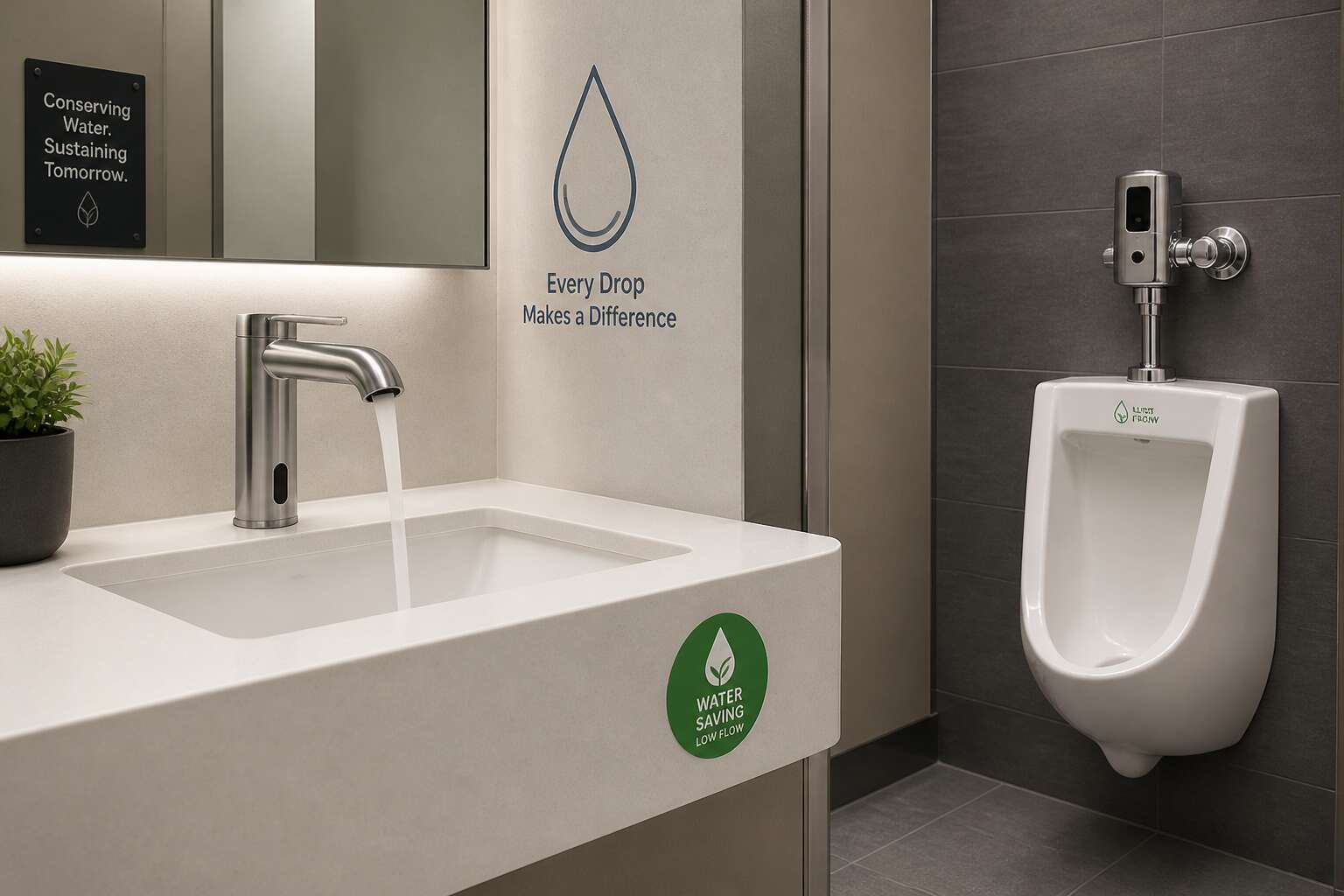
Understanding Commercial Water Consumption
Why Businesses Should Prioritize Water Conservation
South African commercial properties waste an estimated 30% of their municipal water supply due to undetected leaks and outdated fixtures. That figure comes from recent audits by the Department of Water and Sanitation, and it explains why your monthly statement keeps climbing. From my experience, understanding commercial water consumption demands a close look at flow rates, pressure levels, and usage patterns. Monitoring these elements is the first step toward efficiency.
Prioritizing conservation reduces both your water bill and your regulatory risk. Start with your facility’s common problem areas!
- Dripping valve seals that waste liters per hour
- Oversized pipes that create unnecessary pressure
- Legacy toilets with single flush volumes above nine liters
Each of these issues responds directly to water saving devices for businesses, from pressure regulators to dual flush mechanisms. Municipalities facing supply crises often impose quotas or fines on high consumers, and those without efficiency measures suffer first.
Identifying High-Usage Areas in Your Facility
Commercial water consumption follows a logic that is often invisible until the bill arrives. My audits reveal that flow rates, pressure levels, and occupancy schedules determine how much municipal supply your facility actually uses. Understanding commercial water consumption starts with measuring each line and recording daily usage patterns across all shifts.
Identifying high-usage areas in your facility demands attention to specific equipment. Kitchens, cooling towers, and restrooms account for most demand. Older fixtures add complexity. Consider these common sources:
- Pre-rinse spray valves without flow controls
- Cooling tower bleed lines on continuous timers
- Compressed air condensate drains that stay open
A weekend spike in the meter often indicates a leak, not an anomaly.
From my experience, precise measurement transforms conservation into a manageable task. Once you map the demand, water saving devices for businesses such as flow restrictors and aerators address the exact points of waste. Another set of water saving devices for businesses, including occupancy-based controllers, trims consumption during off-peak hours.
The Environmental and Financial Impact of Water Waste
Commercial water waste is not quiet. A six millimeter leak can drain thousands of rand from your monthly budget while straining municipal supply. In South Africa, the financial impact hits first. You pay for water you never use, then pay again for pumping, heating, and treating it. That double charge is inefficiency’s hidden tax.
The environmental cost is less visible but equally severe. Energy embedded in water, treatment chemicals, and delivery emissions follow your consumption.
- A running toilet in a guest facility wastes up to 12 000 litres a month.
- Undetected cooling line leaks account for 15% of a building’s total usage.
These numbers multiply quickly. Deploying water saving devices for businesses, such as automatic shutoff valves and demand sensors, curbs these losses. Your infrastructure knows where the waste lives. The devices put it on a leash.
How Water Audits Reveal Hidden Losses
Most commercial water consumption happens outside your field of vision. Pipes run behind walls, valves sit under floors, and leaks hide in places nobody checks. A proper water audit acts as a diagnostic tool for your system. It compares meter readings, flow rates, and pressure data to calculate exactly where water disappears. The audit reveals the difference between what you think you use and what your infrastructure actually uses. That difference is the hidden loss.
- A refrigeration unit that cycles at night even when the building is empty.
- A pressurised line that spikes with every pump start, indicating a failing check valve.
- A storage tank overflow that only shows up on the water board’s summary.
Once you see these faults on paper, you can choose water saving devices for businesses that target the real problem, not a guess.
Key Water Efficiency Devices for Commercial Properties
Touchless Faucets and Sensor-Activated Controls
In South Africa, municipal water tariffs rise faster than inflation, making every minute of a running tap a measurable expense. Touchless faucets, fitted with infrared sensors, release water only when hands are detected, cutting off the waste caused by forgetfulness.
Sensor-activated controls apply the same logic to a broader scale. They manage urinal flush cycles, shower intervals, and even industrial wash-down systems. Property managers who select these over manual valves are investing in water saving devices for businesses that operate without human vigilance.
High-Efficiency Toilets and Urinals
Older cisterns in commercial buildings often guzzle 12 to 15 litres per flush. Modern high-efficiency toilets cut that to six litres or less, and dual-flush models use just three for liquid waste. For a busy office block, that difference translates into thousands of litres saved monthly.
Waterless urinals offer another breakthrough. They rely on a sealant trap instead of water, eliminating flush volumes entirely. Some building managers hesitate over maintenance, but the savings in municipal bills are immediate. These water saving devices for businesses also reduce sewer loads, which matters where infrastructure strains under demand.
- Dual-flush toilets with a 3/6 litre split
- Waterless urinals with cartridge traps
- Flush valves with occupancy sensors
Pairing these units with regular leak checks ensures no silent drips undermine the gains. South African tariffs keep climbing, so every litre retained matters. Choosing effective water saving devices for businesses requires attention to local water quality and usage patterns.
Water-Smart Cooling Tower Systems
For a commercial property, cooling towers represent the largest concealed water use. Evaporation, drift, and deliberate blowdown drain litres that never reach a tap. Modern water saving devices for businesses now include smart tower controllers that read conductivity and adjust bleed-off automatically.
These systems pair with drift eliminators and pulse-activated chemical dosing. A Durban hotel cut its tower makeup water by 28 percent after installing equilibrium sensors and recalibrating the cycles.
- Conductivity meters to manage mineral concentration
- High-efficiency drift eliminators
- Automated bleed-off valves
South African facilities benefit from reduced municipal draw during peak summer months. The technology pays for itself through lower usage fees and less chemical demand.
Leak Detection and Smart Metering Technology
Leak detection and smart metering catch what visual inspections miss. A commercial building can lose thousands of litres through a concealed pipe fracture or a faulty valve seal, with no visible evidence on the floor or walls. Acoustic sensors listen for the high-frequency sound of escaping water, while smart meters record consumption in hourly increments and flag deviations from expected baselines.
For South African businesses, these water saving devices for businesses provide a layer of accountability that manual readings cannot offer. One Johannesburg office park discovered a repeating overnight draw that turned out to be a rooftop tank float valve stuck in the open position. The waste had persisted for several months before the data exposed it. Municipal tariffs make such silent losses expensive, and the intelligence from metering technology turns a blind spot into a measurable, manageable figure.
Commercial Dishwashers and Steamers with Lower Water Use
On average, a commercial kitchen’s dishwasher guzzles 19 litres per rack. Replacing older units with air-cooled, sensor-driven models drops that figure below 8 litres. Steamers, meanwhile, often boil away water long after service ends. Modern boilerless designs generate steam on demand, eliminating standby losses. These water saving devices for businesses pay for themselves within a year through lower water and energy bills. I have watched kitchen managers shake their heads at the numbers, assuming the waste is just the cost of doing business. It is not.
Consider what to look for when upgrading your equipment:
- Rack sensors that trigger spray only when plates are present
- Condensing technology that recycles steam heat into rinse water
For a Johannesburg caterer, swapping two outdated steamers saved 1,200 litres daily. That is enough to fill 15 bathtubs. The shift requires no behavioural change, only better equipment.
Greywater Recycling and Rainwater Harvesting Systems
In South Africa, municipal water costs climb yearly while supply tightens. Greywater recycling and rainwater harvesting systems offer a different relationship with every drop. Greywater systems collect water from basins and showers, filter it, then redirect it to toilets or irrigation. Rainwater harvesting captures runoff from roofs into tanks, reducing reliance on the grid.
- Storage tanks sized to rainfall patterns
- Filtration units that remove particles and debris
- Pumps and controls that prioritise potable water for drinking
I have seen properties cut their municipal draw by half when both systems work together. These water saving devices for businesses turn a monthly expense into a managed resource. The payoff is quiet persistence, not spectacle.
How to Choose the Right Water Saving Equipment
Assessing Your Building’s Unique Needs
The blueprint of your building rarely reflects the physical reality of its pipes. Corrosion, mineral build up, and decades of municipal supply fluctuations in South Africa change the water’s behaviour. Water saving devices for businesses fail if they ignore these variables. Measure flow rate and static pressure at peak demand hours.
Consider the age of your distribution network. Older structures demand low-flow models that tolerate debris, while newer installations can handle precision electronics. Match the equipment to your specific fixtures, not a generic specification sheet.
- Record pressure at multiple points beyond the mains entry.
- Map the vertical drop in multi-storey buildings.
- Identify water hardness levels from local supply or boreholes.
Once you have this data, the selection narrows itself. A restaurant’s kitchen needs differ from a warehouse’s restroom frequency. The right water saving devices for businesses must match your specific occupants, not the marketing brochures.
Comparing Certification Standards and Ratings
A certification stamp means nothing outside the conditions where it was tested. The SABS mark verifies safety against South African norms. Imported ratings such as WaterSense or WELS reflect foreign supply pressures and treatment regimes. Those labels rarely predict behaviour when borehole hardness or sand content enters the line!
Gravimetric test results reveal actual discharge, not manufacturer intent. Flow curves across pressure ranges expose consistency issues. A certifier choosing sediment-laden water over pristine mains supply changes the outcome.
Consider the standard hierarchy:
- SABS mark: baseline safety and quality.
- SANS standard: locally relevant performance criteria.
- GBCSA recognition: efficiency across whole building systems.
The most useful rating for water saving devices for businesses states test pressure, water temperature, and particle tolerance. We expect certification to mean something, yet many labels hide their parameters. Undocumented performance under African conditions is a risk. Water saving devices for businesses deserve certification tied to local infrastructure.
Calculating Return on Investment for Water Upgrades
Choosing water saving devices for businesses begins with measuring real consumption patterns, not marketing promises. I always ask suppliers for flow data under local pressure conditions. The payback calculation becomes straightforward once you compare annual water savings against installation and maintenance costs.
- Track monthly meter readings to establish a baseline.
- Factor in sewer tariffs, which often double the cost of water.
- Include repair downtime, as every hour lost affects operations.
Return on investment for water upgrades appears when you monitor persistently. A sensor faucet might save 40 kilolitres yearly, but only if staff maintain it. Calculate net present value over five years to see the true benefit. South African businesses face variable tariffs, so test your assumptions with real municipal bills. That kind of analysis turns a purchase into a strategy!
Installation Considerations and Retrofitting Options
Choosing water saving devices for businesses often hinges on installation reality. Retrofitting a building from the 1980s demands different planning than a new build, especially when municipal supply fluctuates across South African regions.
I always check the flow rate and pipe layout first, because retrofits can fail if pressure is inconsistent. An ordered list helps here: measure inlet pressure, trace obsolete plumbing, then match the device’s pressure rating.
- Inspect all fixtures for hidden scale buildup.
- Confirm the device can isolate for servicing.
- Test with a temporary installation.
Each step prevents unexpected shutdowns. For businesses, proper installation matters as much as the equipment itself, so trust a plumber who understands local water chemistry.
Maintenance Requirements for Long-Term Performance
Water saving devices for businesses demand attention after installation, not just during the initial setup. In South Africa, where municipal supply varies, maintenance can make or break long-term performance. I always advise clients to inspect their equipment quarterly. Mineral deposits and pressure surges wear down internal parts silently. A focused checklist prevents costly surprises:
- Check strainers and filters for blockage every 30 days.
- Monitor flow rates against baseline readings after each service.
- Inspect seals and gaskets for signs of swelling or cracking.
Each item takes minutes, but skipping them shortens device lifespan dramatically. Devices with replaceable cartridges simplify repairs and reduce downtime. Training your in-house team to log these checks creates accountability. That discipline turns water saving devices for businesses into reliable assets rather than forgotten fixtures.
Overcoming Barriers to Adoption and Maximizing Savings
Addressing Upfront Costs and Employee Concerns
Financing presents the first obstacle, and a forbidding one. The upfront cost of water saving devices for businesses can stall even the most diligent facilities manager. Municipal rebates and structured payment plans in South Africa offer a reprieve, turning a daunting outlay into a manageable series of payments. Employee concern is the second barrier. Workers may regard new systems with suspicion, fearing disruption to their routines. Hold open sessions where staff can handle the hardware and ask questions. Let them see the tangible benefit.
A phased rollout eases the transition:
- Select one restroom or kitchen zone as a test site.
- Monitor water usage before and after installation.
- Share the resulting numbers with every team member.
- Celebrate the area’s saved water with visible feedback.
When workers witness the change directly, resistance fades, giving way to ownership. Then savings become a shared achievement, not a mandate from above.
Incentives, Rebates, and Water Rate Structures
South Africa’s water pricing tiers reward businesses that cut consumption. The more you reduce, the lower your marginal rate. That is the quiet power of water rate structures, they turn every litre saved into a compounding financial win.
Municipal rebates can offset installation costs, but only if you apply within the correct window. Pair those incentives with a phased adoption approach. Show staff the savings on a live dashboard, and they will help you find more.
- Check your municipality’s rebate calendar
- Negotiate with suppliers for bulk installation discounts
- Review your tariff category annually
Each step lowers the barrier to entry. For water saving devices for businesses, the payback becomes visible in the first billing cycle.
Monitoring and Continuous Improvement Strategies
The first hurdle is seldom the price of hardware. It is the quiet fear that retrofits will disrupt operations. Production lines pause, staff adapt, and managers brace for friction. In South Africa, where load shedding already tests patience, any added disruption feels risky. Facilities that phase installations over weekends or during planned maintenance avoid the chaos. They treat the transition as a logistical exercise, not a gamble.
Once devices run, monitoring reduces hesitation. Smart meters reveal patterns that manual checks miss, like a valve that leaks only at night. Tracking those numbers weekly builds a feedback loop. Staff see where savings come from, and conservation becomes routine rather than a campaign.
The usual barriers:
- Split incentives between landlords and tenants
- Fear of maintenance complexity
- Unclear allocation of water costs
Each barrier is overcome when data is shared openly. For water saving devices for businesses, the real return appears after installation, in the discipline of daily observation and the adjustments that follow.
Creating a Company Culture of Water Stewardship
Adoption stalls when water saving devices for businesses feel like someone else’s mandate. The maintenance team inherits the hardware, the finance department watches the meter, and the rest of the staff never think about it. Cultivating stewardship means making conservation a shared language. When a technician reports a dripping valve and the office manager records the fix, responsibility moves through the whole team.
Barriers dissolve when people understand their role. A chart in the tea room showing weekly consumption, a short toolbox talk before a shift, or a monthly shoutout for the department that cut usage the most. These are simple, repeatable actions.
- Assign water champions in each department
- Tie a portion of the performance bonus to reduction targets
- Publish monthly progress in plain language
The real savings surface when behaviour shifts. Water saving devices for businesses only measure potential; people unlock it!

0 Comments