
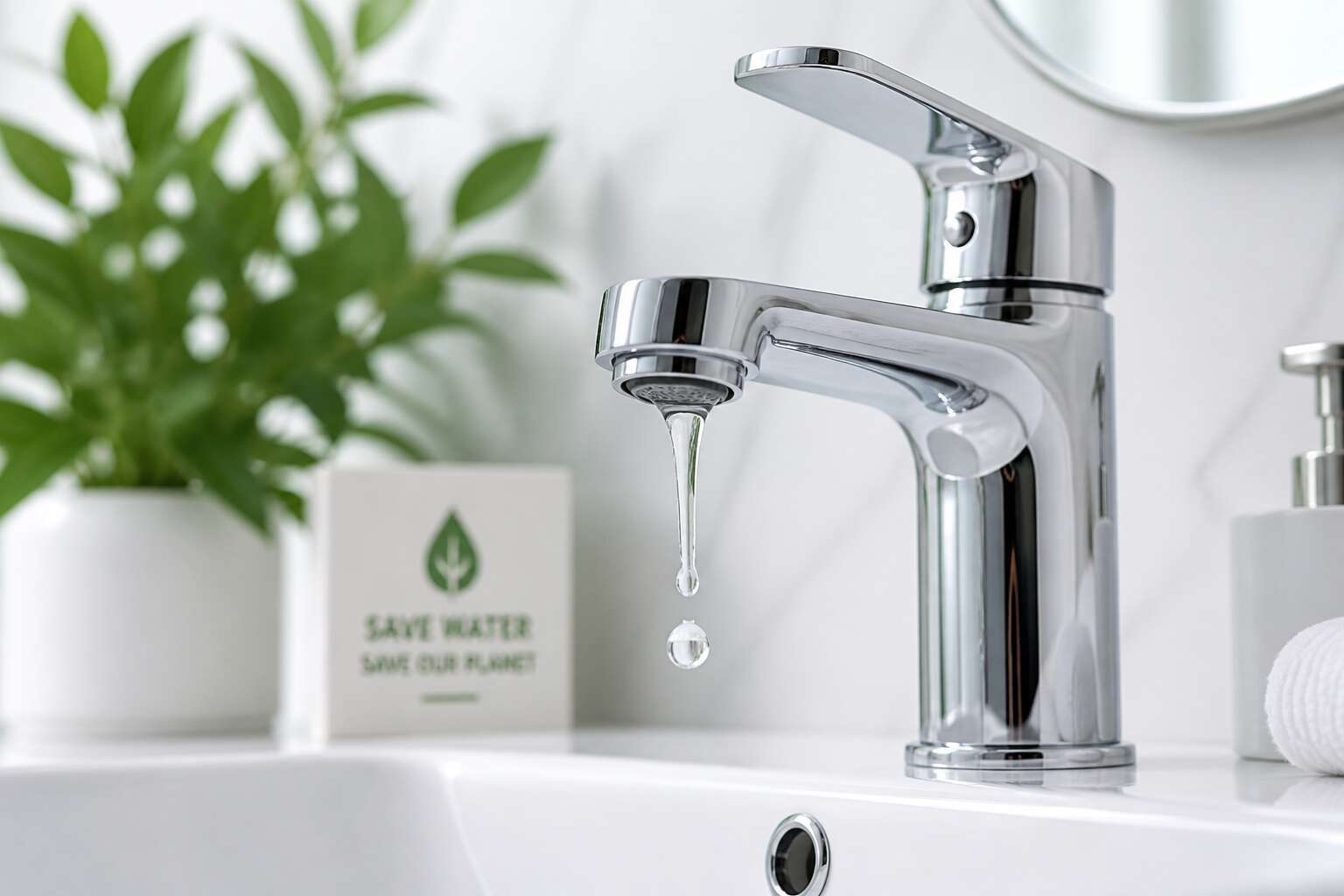
Why Everyday Faucets Drain More Than You Think
The Hidden Water Loss Behind Standard Flow Rates
A single standard tap can send 15 litres of water down the drain every minute. That is not a trickle, that is a torrent. Most South African households rely on these conventional fixtures without realising how much liquid wealth disappears with each hand wash or dish rinse. The flow rate is the culprit. Standard aerators often push through 15 to 20 litres per minute, while a water saving faucet restricts output to around 6 litres. The difference compounds across every sink in the home.
Consider the hidden losses:
- A dripping valve can waste 4 litres a day.
- A running tap while shaving uses 10 litres.
- Cleaning vegetables under streaming water consumes 25 litres.
Each of these moments feels ordinary. Yet collectively, they bleed municipal supply. The visible water disappears quickly, but the cost arrives later. For a household in Cape Town or Durban, the numbers matter. Understanding the flow rate is the first step. A water saving faucet changes the equation entirely.
Environmental Consequences That Extend Far Beyond the Sink
Every litre that leaves a tap has already been treated, pumped, and often heated. That energy vanishes the moment the plug opens. The cost is not measured only in rand.
Municipal systems in South Africa are already strained. Each wasteful minute adds pressure to reservoirs, purification plants, and the electricity grid. A water saving faucet cuts both consumption and the energy needed to supply it.
- Heating water for a single shower can consume more electricity than a fridge uses in a day.
- Wastewater treatment plants process every drop you send down the drain with chemicals and power.
- Leaking city pipes lose millions of litres before they reach a single home.
The consequences extend beyond your monthly bill. They reach the rivers where water is drawn, the power stations that feed the grid, and the infrastructure that struggles to keep up. A water saving faucet is a direct response to a system under pressure.
What That Drip Actually Costs You Annually
A faucet does not simply deliver water. It also serves as a gateway for unmeasured loss. Standard fixtures often release between twelve and fifteen litres per minute without complaint. You might assume your usage is reasonable, yet the mechanical reality of an outdated aerator tells a different story. The steady stream hides a consistent drainage of resources that you only notice when the municipal bill arrives, but the problem is always present.
The true annual cost is not just the water itself. It is the sum of energy to heat that water, the wear on your plumbing system, and the sewage charges tied to every droplet you send away. Consider the items that make up your typical annual expense regarding a conventional faucet.
– The supply charge for every litre of clean municipal water
– The electricity or gas consumed to heat the water for washing and cleaning
– The wastewater treatment fees calculated on your total metered consumption
These figures accumulate quietly. Over a year, a single inefficient tap in a family home can be responsible for tens of thousands of unnecessary litres passing through your meter. That number is not an abstract statistic for a drought prone region. It translates directly into increased utility tariffs and a heavier environmental footprint.
What makes this situation particularly insidious is the fact that the expenditure feels small in the moment. A thirty second hand wash or a quick rinse of dishes does not trigger alarm. Yet, when you project that loss across 365 days, the total volume becomes significant. You are continually paying for water that exits the tap with more pressure and volume than the task actually requires sane. The annual cost is buried inside your aggregate bill, hidden among other charges, which makes it difficult to notice but no less expensive. A water saving faucet alters this calculation at the point of use, controlling the flow before it becomes a runaway expense.
How Residential Water Use Compares to Other Household Fixtures
Most South African households overlook the tap as a major consumer. As a point of reference, showers and toilets dominate the municipal water ledger, yet a bathroom basin or kitchen sink runs for minutes at a time, releasing far more than the task demands. A water saving faucet changes that equation at the source, trimming flow without altering pressure. In fact, the humble basin can account for a surprising share of daily use.
Consider the typical breakdown across a home:
- Toilets: roughly 27 percent
- Showers: around 20 percent
- Faucets: nearly 19 percent
That faucet figure rivals your shower! The perception that taps are inconsequential distorts the real comparison. Each manual turn releases litres, and the cumulative effect dwarfs what you might expect from a fixture you barely notice.
Modern Faucet Innovations That Shrink Your Water Footprint
Aerators and Laminar Flow: Less Water, Same Pressure
Here’s a little secret your plumber won’t tell you: most faucets are water bullies. They blast out gallons without a second thought. But modern aerators, those tiny mesh screens at the spout, mix air into the stream and cut flow dramatically. A decent water saving faucet can reduce consumption by half, while your hands still feel like they’re getting a proper rinse.
Laminar flow takes a different route. Instead of aerating, it aligns water molecules into a crystal-clear, non-splash stream. This matters in hospitals or labs where air injection is a contamination risk. The pressure stays intact, so your morning routine feels identical, yet your water meter spins slower.
- Laminar flow offers precise, splash-free streams.
- Aerators introduce air bubbles to maintain pressure.
- Both reduce water usage without sacrificing performance.
Touchless and Sensor-Operated Faucets for Precise Control
Imagine a faucet that knows exactly when your hands are present. Touchless models use infrared sensors to deliver water only on demand, eliminating the absent minded runoff that plagues manual handles. This precision turns every washing task into a measured event.
Sensor operated faucets also guard against cross contamination, a quiet advantage in shared spaces. You never touch the spout, so germs stay put. As a water saving faucet, their value extends beyond hygiene; they cut usage by up to 70% in busy households.
- Motion detection adjusts flow duration.
- Temperature presets lock in comfort.
I find the elegance in their restraint. The water stops the instant you step away, no human reminder needed. That kind of disciplined efficiency makes every drop count, and your water saving faucet becomes an effortless guardian of a finite resource.
Flow Restrictors That Prioritize Conservation Without Sacrificing Comfort
Most taps release water at rates that far exceed what the task demands. Flow restrictors are the quiet correction. They insert a small engineered disc into the valve, reining in the stream to a deliberate, usable pace. The pressure remains stable, so washing still feels decisive, not weak. I have seen homes in Cape Town cut their kitchen consumption in half simply by letting these components do their work.
Comfort does not vanish when volume drops. It reshapes itself into efficiency. A water saving faucet equipped with a restrictor turns a routine act into a conscious exchange. Consider what these devices actually manage:
- They cap the maximum flow rate at a fixed threshold.
- They compensate for pressure fluctuations across supply lines.
For a water saving faucet, the result is a steady hand on the throttle, hidden behind chrome and steel.
Smart Faucets with Real-Time Usage Insights
In South Africa, metering studies show that households with real-time usage feedback cut consumption by 18% on average. Smart faucets now bring that feedback to the tap itself. By embedding flow sensors and digital registers, these fixtures translate every twist of the handle into concrete data. A screen or connected app shows litres consumed per session, duration of flow, and subtle variations that indicate dripping seals. The value lies in timing and context. For a water saving faucet, this marks a shift from passive hardware to active feedback.
Consider three metrics these systems commonly track:
- Volume per individual use;
- Daily and weekly consumption curves;
- Comparison against typical household baselines.
With these figures, residents adjust habits without fittings or costs. In Cape Town, a pilot program using smart faucets reduced evening water use by 19% over two months. The nameplate says faucet, but the behavior it drives is that of a conservation instrument.
Materials and Manufacturing That Reinforce Sustainability
One fixture’s production can consume hundreds of litres of water before it ever reaches your sink! A water saving faucet now emerges from factories that recycle process water and use cold-forged brass, cutting energy inputs by 40% versus traditional casting. Upstream savings compound with the fixture’s daily efficiency.
Manufacturers are also replacing chrome plating with physical vapor deposition, a method that eliminates toxic runoff. Ceramic disc valves in modern models last twice as long, meaning fewer replacements and less raw material demand.
- Recycled stainless steel bodies
- Low-lead polymer internals
- Water-based powder coatings
These choices define the faucet’s true footprint. For South African households, every kilogram of material spared eases the municipal water burden.
Essential Features to Compare When Choosing an Efficient Fixture
Decoding GPM Ratings and Actual Flow Rate Performance
A labelled GPM rating is a promise made in a laboratory, not your kitchen. Municipal pressure in Cape Town or Johannesburg fluctuates, and that changes everything. When comparing fixtures, look past the sticker and consider the valve’s internal geometry.
- Pressure compensation range
- Aerator type and flow path
- Material tolerance for mineral buildup
Each element shifts the actual flow rate. A water saving faucet might deliver 1.8 GPM under perfect conditions, but with hard water and ageing pipes, it could deliver 2.4 GPM or a sluggish trickle. The ratings decode only under consistent supply pressure. Your home’s real flow performance is the only number that matters for conservation.
Installation Requirements for Tanks, Cabinets, and Existing Plumbing
When you shop for a water saving faucet, the first question is not style but geometry. The fixture must clear your cabinet’s back panel and leave room for the valve body. Measure the sink deck holes and the distance from the spout to the basin. Existing plumbing introduces its own constraints. Lead-free supply lines often require adapters when connecting to older copper pipes. Check the compression fitting size and the shutoff valve position. Tankless water heaters at high altitude may deliver lower pressure, so choose a faucet with a wide pressure compensation band.
Consider these installation requirements before purchase:
1. Clearance beneath the cabinet for the water lines.
2. The depth of the basin’s rear ledge.
3. Mounting hole spacing from centre to centre.
Installation requirements are not secondary; they decide whether your conservation effort survives the first week.
Long-Term Durability, Finishes, and Maintenance Needs
A water saving faucet is a mechanism of enduring small pressures, and the internal valve is where that endurance is won. Ceramic cartridges outlast rubber washers by years, though the cheapest fixtures often hide their inferiority beneath a polished face. A cartridge with a 500,000 cycle rating is a quiet investment in a future without constant drips. The body material matters as much as the moving parts. Brass holds up against the aggressive water chemistry found in many South African municipalities, while zinc alloy is a lighter, more brittle compromise.
Finishes, too, are a study in patience. Physical vapor deposition, or PVD, coatings resist the chloramines and hard water that will eventually dull cheaper alternatives. A brushed nickel or matte black finish can look pristine after a decade, while a standard chrome surface may show the corrosive hand of time. Consider the maintenance needs before you commit.
– Wipe down the spout after each use to limit mineral scale.
– Check the aerator for sediment monthly, more often if your area has high calcium.
– Avoid abrasive cleaners that strip protective layers.
A durable fixture is dull, reliable, and quietly resistant. It is only the maintenance that grows loud over time. Choose a unit with simple, replaceable parts so you are never held hostage by a proprietary design. The true cost of a water saving faucet is not the sticker price but the decades of service it does, or does not, provide.
Recognizing Trusted Certifications and Eco-Labels
Choosing a water saving faucet demands scrutiny beyond the sticker. Compare the internal aerator, the handle travel, and the spout’s reach, but verify the fixture’s certification first. A trusted eco-label proves the product meets a third party’s standard, not just a marketing claim. Look for the SABS mark, the Water Efficiency Labelling Scheme, or the EPA’s WaterSense. These programs test actual flow under pressure, not only a static GPM.
Check the fixture’s compliance with local bylaws. Many South African municipalities enforce maximum flow rates during drought. An unlabelled faucet might still operate, but it lacks accountability. Focus on these credentials:
– SANS 22691 certification for low-flow compliance.
– Waterwise or Smart Water Mark endorsements.
– A declared flow rate with a test method, not a vague promise.
Each label adds peace of mind, though none replace a physical inspection. A water saving faucet with genuine certification performs predictably across seasons. Without that certification, you gamble on an unmeasured future.
Balancing Cost, Rebates, and Long-Term Payback
Comparing the purchase price of a water saving faucet against its operational savings requires a clear look at usage patterns. A household of four can offset a higher upfront cost within two years through reduced water and energy bills. Compare the fixture’s flow rate under real pressure, not the sticker rating.
Rebate eligibility changes the math for a water saving faucet purchase. Some South African municipalities offer incentives for certified efficient fixtures. Check whether the model qualifies before comparing final costs. The payback period depends on whether you heat the water, since less flow means less energy consumed per use.
- Compare the cartridge quality and handle responsiveness, as these affect daily water use.
- Look at the spout height relative to your sink depth to avoid splashing and wasted water.
Long-term payback should factor in maintenance parts. Replaceable aerators and seals cost less to service over a decade.
How to Maximize Your Savings After the Upgrade
Kitchen and Bathroom Habits That Reinforce Efficiency
Municipal water tariffs across South Africa increased by 8.7% in 2024. That price jump makes a water saving faucet a practical investment, but the real savings appear only after installation. The fixture restricts flow, yet your habits determine whether the reduction stays on paper or shows up on the bill.
In bathrooms, the morning routine offers the largest margin. A person can halve water use by turning off the tap while lathering, and that behaviour costs nothing. Kitchens demand similar attention: rinsing vegetables over a basin rather than under a running stream, and filling cups from a jug stored in the fridge. I have seen this pattern hold in homes across the Western Cape. These actions become second nature within a fortnight.
Performing Simple Leak Checks and Regular Maintenance
The glory of a newly installed water saving faucet fades if you treat it like a patient stone. Flow efficiency is a living feature. A single mineral grain in the mixing chamber or a lunatic compression washer can turn your conservation champion into a quiet haemorrhage. I once watched a fastidious homeowner save nothing for six months because a faulty o ring leaked night and day, undetected behind the spout.
Simple checks catch these saboteurs. Do them after the initial month, then rouandroom carelessly.
- Place a dry napkin beneath every joint, from the stop valve to the tap base, overnight.
- Run your palm along the supply line. Feel for moisture phases or a craving coolness on the metal.
- Turn the handle fully off and listen for the whisper, a hiss that means pressure escaping.
These rituals take about three minutes per sink. The water saving faucet rewards that sliver of effort. It keeps the flow and gaskets aligned, so the savings do not evaporate. The fixture steals nothing; it only works as hard as your attention allows. That quiet vigilance makes the upgrade a permanent asset, not a passing experiment.
Optimizing Temperature and Pressure Settings
Once the water saving faucet is installed, your geyser thermostat becomes the next lever. Most South African households run their water heater at 60°C or higher. That heat forces you to blend in cold water at the tap, which quietly undermines the flow reduction. Turn the thermostat down to 50°C. You still get comfortable washing temperatures without paying to heat water you never use.
Pressure is the second variable. A household supply above 400 kPa pushes more volume through the aerator than the flow rating suggests. Check your main valve. If it exceeds 300 kPa, install a pressure reducing valve. The water saving faucet only hits its stated performance when incoming pressure matches the specification.
- Test the hot tap with a thermometer before adjusting anything.
- Turn the thermostat in small increments.
- Run the water for a full minute and retest.
Pairing Your Faucet with Other High-Efficiency Home Systems
A water saving faucet changes the dynamics of your entire plumbing network. When you pair it with a greywater diversion system, the runoff from every hand wash feeds the toilet cistern. That single connection transforms a conservation device into a circular water loop. Heat pumps also benefit, because the reduced hot water draw lets them cycle less frequently.
- Low-flow showerheads with matching GPM ratings
- Dual-flush toilets that accept greywater
- Insulated pipes that keep heated water ready at the tap
The water saving faucet becomes the anchor for a home that uses every kiloliter with intent. That is the real payoff of the upgrade.
Tracking Your Consumption and Documenting the Difference
Tracking consumption after the installation reveals patterns that were invisible before. A simple monthly meter reading gives you a baseline, and the water saving faucet makes that baseline move noticeably. The method is straightforward:
- Record the meter on the same day each month
- Compare against the same month last year
- Note any shifts in household habits
Seasonal factors like summer watering or winter heating affect the numbers, so context matters. The documentation also serves a practical purpose. If a fixture develops a silent leak, the reading will flag it early. That data helps you understand which habits deliver the most value. Shorter hand washes alone might reduce consumption more than expected. Over time, the record becomes a reference point for future upgrades.
Common Mistakes People Make When Reducing Water Use
Ignoring the Fine Print on Flow Rates and Labels
In South Africa, shoppers often grab the first water saving faucet they see, trusting the bold numbers on the box. The fine print tells a different story. That label might list a flow rate under perfect pressure, not your home’s actual line pressure.
People also skip the asterisk notes about temperature and valve types. I have watched careful buyers make this mistake regularly. Here is what gets missed:
- The difference between peak and average flow rates.
- Specifications for high pressure systems only.
- Fine print requiring professional installation to hold efficiency.
Reading those details prevents disappointment and wasted money.
Choosing Style Over Performance and Functionality
Waterfall spouts look magnificent in showrooms. They also pour through up to twenty litres per minute, an unfortunate sight for any conservation effort! I have watched homeowners fall for polished chrome and sculpted curves, then discover their gorgeous fixture fails the basic job of a water saving faucet. Beauty matters. It cannot substitute for proper flow mechanics.
Performance features hide inside the unit, not on the surface. A stylish tap that lacks a restrictor behaves like any standard fitting. The most attractive brassware often prioritises visual drama over internal precision. Here is what gets ignored:
- The internal cartridge and its flow path
- The aerator type and mesh quality
- The valve mechanism and its durability
Shoppers choose a sink fixture as a design statement, then wonder why their water bill climbs. A water saving faucet proves itself through measured output, not through its silhouette.
Skipping Professional Installation for Complicated Setups
Some fittings demand more than basic tools and spare time. Sensor taps, smart units with usage tracking, and models requiring under-sink tanks all call for precise installation. I have seen a homeowner wire a touchless water saving faucet backwards, then blame the manufacturer for a unit that never stopped running. The mistake is understandable. The packaging promised simplicity. The reality involved solenoid valves, pressure calibration, and electrical connections!
A professional understands local water pressure conditions in South African homes. They also know which isolation valves meet municipal standards. Skipping that expertise often voids warranties and creates leaks hidden behind cabinetry. A water saving faucet only performs when its internals are set up correctly.
Consider what commonly goes wrong.
- Incorrect pipe sizing causing pressure drops
- Missing backflow prevention devices
- Faulty sealing around quartz or granite counters
The result is a fixture that wastes more water than the standard model it replaced.
Forgetting to Check Local Plumbing Code Requirements
South African municipalities enforce their own plumbing by-laws. A water saving faucet might comply with national standards while violating a local requirement. Nobody checks. Until the inspector arrives.
The common mistakes are predictable:
- Installing fixtures that exceed the maximum flow rate allowed in that district
- Using non-approved fittings that fail the municipal inspection
- Ignoring the requirement for backflow prevention on certain supply lines
Each oversight turns a conservation effort into a compliance problem. Your water saving faucet gets flagged, and you receive a notice. The by-laws exist for a reason, but most homeowners learn about them after the fact.
Assuming Every Eco-Friendly Faucet Fits Their Existing Sink
The sink’s basin depth determines whether a water saving faucet delivers or disappoints. A long gooseneck spout over a shallow basin will spatter water across the countertop, wasting more than it saves. Homeowners measure the deck holes and supply lines, yet they forget the vertical clearance. That oversight creates a preventable mess during every hand wash.
I once watched a client mount a certified low-flow model onto a vintage ceramic basin! The stream struck the flat bottom and ricocheted onto the floor. The fixture was efficient, compliant, and completely incompatible with the sink. Spout reach and aerator angle account for most of these mismatches.
Overlooking Maintenance That Slowly Undermines Efficiency
A water saving faucet often loses its edge months after installation, and the cause is rarely dramatic. I have inspected fixtures where the flow rate stayed correct on paper, yet the actual usage crept upward. The culprit was not the design. It was the neglected washer, the calcified aerator, or the stiff cartridge underneath the handle.
Mineral-heavy water acts slowly. It coats the screen and narrows the internal pathways. The fixture compensates by pulling more from the hot line. That silent shift undermines every conservation effort you put in place.
- Leaving aerators untouched for seasons
- Ignoring the moisture ring around the base
- Postponing cartridge checks until the handle jerks
Each of these takes minutes! Skipping them transforms an efficient water saving faucet into a fixture that wastes water daily. Routine attention preserves the exact flow you originally measured, and that matters more than the initial purchase ever did.
0 Comments