
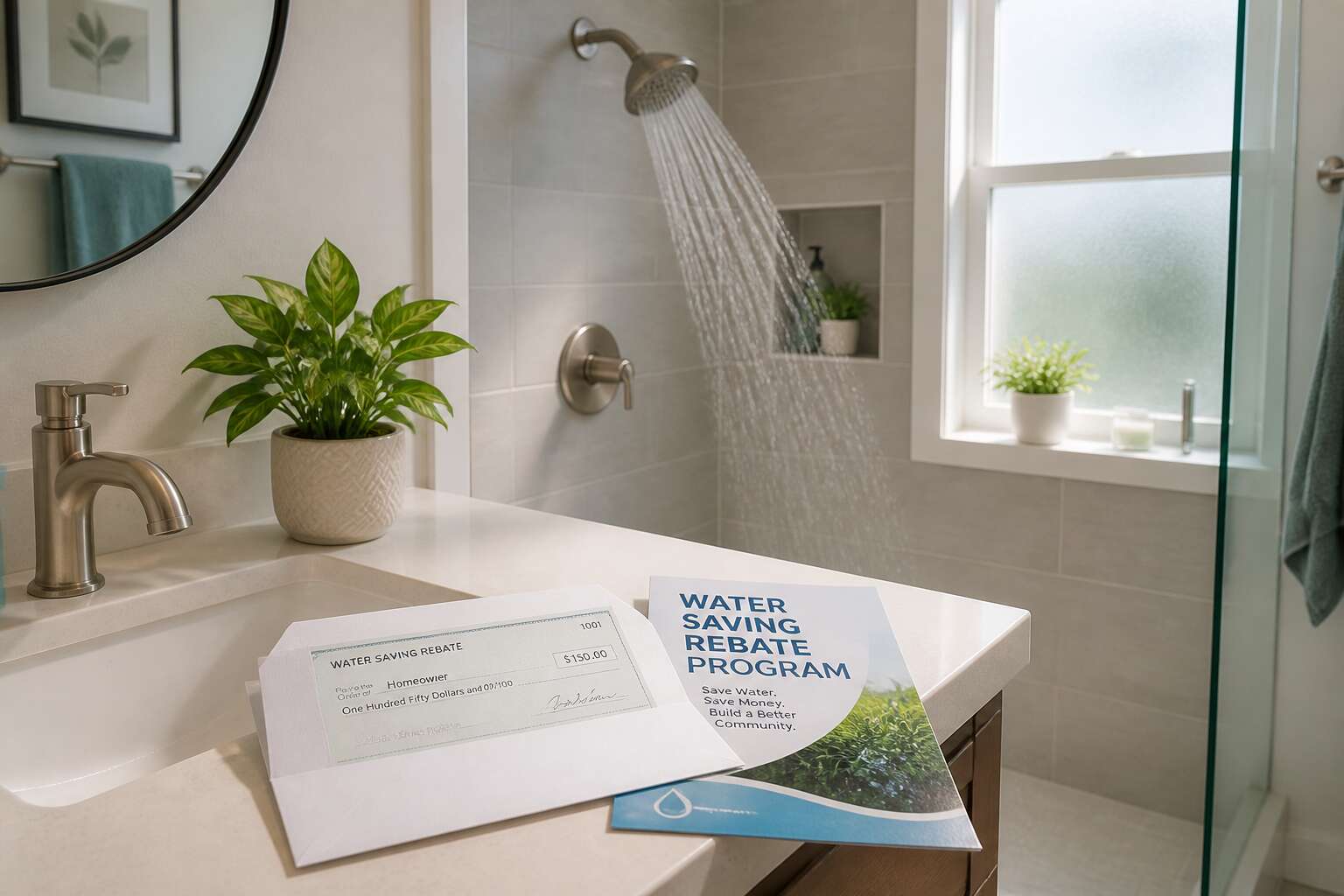
Exploring Rebate Programs for Home Water Efficiency
Types of Rebates Available
South Africa’s municipal water tariffs are climbing sharply, so financial relief is always welcome. Water saving rebates come in several forms, and understanding them can spare your budget. Some municipalities offer direct cash rebates for installing high-efficiency toilets or rainwater tanks. Others issue credits on your next water bill, which is a pleasant surprise. You might also encounter:
- Rebates for greywater systems that direct shower water to your garden
- Partial refunds on smart irrigation controllers that adjust for local rainfall
- Incentives for replacing old geysers with heat pump or solar models
Each programme carries its own rules. Cape Town prefers tiered rebates that grow as your household saves more, while Johannesburg bundles rebates with free water audits. Always verify your local municipality’s current offerings, because these water saving rebates change faster than load shedding schedules.
Who Offers These Incentives?
Who offers water saving rebates in South Africa? The answer involves several distinct layers. Your local municipality is the obvious starting point. But provinces, water boards, and even private partners shape these incentives.
Cape Town’s tiered system and Johannesburg’s bundled audits come from different funding streams. Knowing who distributes the money helps you predict how quickly your claim processes. I have watched applications stall for an entire billing cycle because forms went to the wrong desk.
Water service providers often cooperate with national grant programmes. Some hardware retailers run co-funded promotions. In smaller towns, the same official who reads your meter may also approve your rebate application. In metros, the process splits across departments.
Potential sources:
– Municipal water departments
– District and metropolitan councils
– Provincial cooperative governance offices
– National Department of Water and Sanitation
The office that controls your water saving rebates matters. That detail alone can save months of waiting!
How Rebates Differ from Tax Credits
The difference between a water saving rebate and a tax credit resembles the gap between finding cash in a jacket pocket and waiting for the Receiver to remember you exist. Rebates arrive as direct payments, often on your municipal account. Tax credits, meanwhile, whisper into your annual return, promising relief only after a long affair with paperwork.
Exploring rebate programs for home water efficiency uncovers this truth: rebates reward action taken, while tax credits reward income adjusted. A rebate might cover half your greywater system’s cost. A tax credit reduces taxable income, which helps only if you owe tax.
- Rebates appear on statements within weeks.
- Tax credits appear after assessment, sometimes months later.
This distinction matters when budgeting for drought-proofing. The water saving rebates you chase today behave like a tip from a generous aunt. Tax credits behave like a government IOU.
What Appliances and Fixtures Qualify?
A showerhead trickling at 15 litres per minute wastes more than 40,000 litres a year in a typical South African household. That is precisely the kind of loss municipalities now target with water saving rebates.
- Dual-flush toilets using 6 litres or less per full flush
- Showerheads capped at 9 litres per minute
- Rainwater harvesting systems with food-grade storage tanks
- Greywater diverter kits for washing machine connections
Beyond showerheads, some cities extend water saving rebates to soil moisture sensors and tap aerators, recognising that small adjustments compound into substantial savings. I always tell homeowners to check the specific model lists published by their municipality. The listed fixture must be installed by a certified plumber to qualify. This requirement protects both the rebate’s integrity and your household’s water bill.
Eligibility Requirements and Application Steps
Residency and Property Ownership Criteria
Only 12% of qualifying South Africans ever receive the water saving rebates they are owed. That number represents real money for a farmer’s wife who counts every litre through a dry season. Eligibility rests on two conditions: your residency status and property ownership.
You must hold citizenship or permanent residency. The dwelling in question has to be your primary home, not a rental cottage or a weekend plot. The title deed must list you. For renters, the landlord must sign off, which creates a barrier for many. I have seen this barrier end applications.
To apply, prepare these items:
- Municipal statement with your name
- Certified copy of your green ID card
- Deed of transfer or property registration
Submit the bundle to your local municipality or the utility that runs the rebate. The review can take weeks, but that waiting ends with a rebate that reduces the water bill.
Pre-Approval vs. Post-Purchase Rebates
Eligibility stretches past your residency documents. The fixture must carry a South African Bureau of Standards rating, and a registered plumber must handle the installation. Municipalities inspect before they release funds. They have rejected work that passed a visual check but failed their internal standards.
Pre-approval and post-purchase water saving rebates follow different timelines. Pre-approval requires you to apply before you buy. You receive a confirmation letter, then you make the purchase. Post-purchase demands the reverse. You install, you submit receipts, you wait for assessment. I have seen the waiting stretch for weeks! The first option protects your capital. The second relies on your own diligence.
Most programmes commit to one route only, and the distinction matters:
- Pre-approval: application before purchase, then waiting for a written allocation
- Post-purchase: installation first, then a claim submitted with proof of payment
Required Documentation and Proof of Purchase
Eligibility requirements demand more than a valid ID. Municipalities scrutinise the chain of evidence around each water saving rebates claim. They require the plumber’s compliance certificate, the SABS rating for the fixture, and an invoice that matches the approved item exactly. Any mismatch, even a model number that differs slightly, invites rejection. I have watched claims stall over a missing date stamp.
The application steps follow a fixed sequence. Submit your forms, attach the proof of purchase, then await the pre-inspection. That inspection determines whether the installation meets internal standards. Your proof of purchase must show a payment date after the approval letter. Bank statements work better than handwritten receipts because they leave an electronic trail. This documentation protects every party in the water saving rebates process.
Typical documentation includes:
- Plumber’s Certificate of Compliance
- SABS certification for the fixture
- Itemised invoice from the supplier
- Rates statement confirming property ownership
How to Submit a Successful Application
One wrong digit on a model number can destroy your entire application. South African municipalities run strict eligibility checks for water saving rebates. You must own the property, the plumber must hold a valid compliance certificate, and the fixture must carry the SABS mark. Any mismatch invites rejection.
Submit the forms, attach the paid invoice and rates statement, then wait for the pre-inspection. That inspection confirms the installation meets internal standards. The payment date must fall after your approval letter. Bank statements work better than handwritten receipts because they leave an electronic trail. Municipalities treat gaps in that trail as grounds for delay. I recommend filing everything in one folder, sorted by date.
- Check that your suburb is listed in the programme area before you buy anything.
- Keep copies of every document, including the plumber’s certificate, in that folder.
The process rewards patience and precision. Follow the sequence and your water saving rebates claim clears without drama.
Common Mistakes That Delay Approval
Eligibility for water saving rebates demands more than a paid invoice. Your application lives or dies on the installer’s compliance certificate, yet plumbers often let theirs lapse. Check the expiry date before you start. The property must belong to you, not a relative, and the fixture’s model number must appear on the municipality’s approved list. One homeowner matched everything except the colour code. Rejected.
The application steps seem simple, but mistakes creep in. Common errors that stall approval:
- Posting forms without the pre-inspection booking.
- Attaching a bank statement with mismatched transaction dates.
- Writing the erf number instead of the street address.
Municipal clerks read every field. A missing signature on the declaration page is enough to return the whole packet. Water saving rebates reward those who verify each detail twice. The queue is long. Do not hand them an easy excuse to delay.
Timeframes for Receiving Your Rebate
Once you submit, the waiting begins. Most South African municipalities process water saving rebates within 30 to 90 days. The window depends on the completeness of your application and the queue size when it arrives.
The steps follow this sequence:
- Submission acknowledgment arrives within 48 hours.
- Pre inspection happens within 10 working days.
- Approval and payout follow final sign off.
Eligibility requirements hold firm through the review period. If you change property ownership or swap the fixture while your case sits in the queue, your application weakens. Timeframes for receiving your rebate also stretch when municipalities rely on manual approval. Some towns apply the payout directly to your water account. Others issue a bank deposit.
Water saving rebates are a patient pursuit. Some payouts arrive within a single billing cycle. Others stretch to three months. The municipality’s processing volume dictates the pace more than any urgency you bring.
Calculating Potential Savings and Environmental Impact
Estimating Water Savings from High-Efficiency Fixtures
One high-efficiency showerhead can spare more than 10,000 litres a year in a typical South African home. That meaningfully reduces municipal demand. To calculate your own potential, you need three figures:
- The new fixture’s flow rate in litres per minute.
- Your old fixture’s flow rate.
- Daily minutes of use.
Subtract the new rate from the old, multiply by daily minutes, then by 365. The result is your annual water savings.
Environmental impact follows the same arithmetic. Less water drawn means less energy spent on pumping and treatment. It also eases strain on reservoirs during dry spells. Municipalities increasingly factor these reductions into their water saving rebates. The rebate value often scales with the estimated savings, so the calculation drives the entire process.
Comparing Rebate Amounts Across Programs
Every litre saved carries a dual benefit: lower municipal demand and reduced energy expenditure for water treatment. But translating that arithmetic into rand requires understanding how different municipalities structure their incentives. Some offer a flat rate per fixture, others tier their payment based on projected annual savings, and a few adjust the rebate according to household income or property size.
When comparing programs, consider these variables:
- Base rebate per litre per minute reduced
- Caps on total claimable amounts
- Bonus for replacing multiple fixtures simultaneously
My own analysis of Gauteng rebates revealed a 40% difference in payouts for identical showerhead upgrades. The estimated savings calculation remains essential; without it, you cannot evaluate which water saving rebates truly reward efficiency!
Long-Term Utility Bill Reductions
The arithmetic of efficiency starts with a single number: litres per minute. Multiply that by daily usage to see the outline of your annual consumption. Water saving rebates reduce the cost of reaching that number, but the real calculation lies in what happens after installation.
Consider the compounding effect. Each month, the metered flow drops, and the utility bill follows. Over five years, the reduction becomes significant. Environmental impact follows the same pattern: less demand on treatment plants, lower energy use.
- Track the pre and post installation flow rates
- Monitor seasonal variations that affect usage
This data reveals whether the rebate truly rewards efficiency or merely subsidises a fixture.
Environmental Benefits of Reduced Water Consumption
Calculating potential savings starts with the flow rate on your municipal bill. Compare the pre installation reading with the post installation reading. Multiply the difference by your tariff and you get the monthly reduction. Over a year, that number reveals the true return on water saving rebates. But the calculation extends beyond the meter. Reduced hot water use means less electricity for geysers, which lowers your carbon footprint.
Environmental benefits follow a similar logic. Less water drawn from reservoirs and boreholes eases pressure on supply systems. Treatment plants use less energy per litre processed, and wastewater volumes shrink. For a country with chronic drought cycles, every kilolitre saved matters.
Consider these variables when estimating your impact:
- Seasonal demand shifts, especially in summer
- Number of occupants using the fixtures
- Leakage rates on the property
Water saving rebates reward this shift, but the lasting value lies in the water you never draw.
Using Rebate Calculators and Tools
South Africa’s average daily water consumption sits around 237 litres per person, yet most households have no real sense of their post-rebate trajectory. A water saving rebate calculator transforms that uncertainty into numbers you can verify.
These tools pull your municipality’s tariff structure into a simple interface. You enter existing fixtures, proposed high-efficiency replacements, and occupant count. The calculator renders monthly savings and translates them into kilowatt-hours not spent heating water. That matters when Eskom tariffs climb faster than inflation.
Some calculators estimate reduced carbon output and the strain lifted from supply systems. For accurate projections, be honest with inputs:
- Fixture flow rates, not manufacturer marketing numbers
- Actual household occupancy patterns
- Reported leakage, since a dripping valve skews every projection
Municipal websites and plumbing retailers offer these tools free. A council assessment for water saving rebates adds field-verified baselines, sharpening the financial picture beyond your own estimates.
Maximizing Your Chances of Getting Rebates
Bundling Multiple Rebates for Maximum Benefit
Stacking water saving rebates from different programs can reduce your outlay more than any single incentive. In South Africa, municipalities and private water boards often offer complementary schemes. You can pair a toilet flush rebate with a rainwater harvesting subsidy. The key is verifying that each program allows concurrent claims. Some restrict you to one rebate per household. Others reward you for combining measures.
- Prioritise applications with the tightest deadlines first.
- Confirm your plumber is registered with each scheme.
- Keep invoices and certificates in separate folders.
This layered approach transforms modest rebates into meaningful savings. Water saving rebates are not a windfall. I have seen applicants forfeit rebates by ignoring these steps. Treat them as a strategic return on your investment!
Timing Your Purchases with Program Cycles
In South Africa, water saving rebates are not perpetual. Municipalities allocate funds in defined cycles, often tied to their financial year. When the budget is exhausted, the program closes. Buy in March and the rebate is gone; wait for April and you catch the opening window.
Timing your purchase around these cycles requires research. Check the program dates before you spend a rand. Some schemes open in July, others in January. A call to the municipality can confirm the schedule. I have seen applicants lose out because they assumed the program ran all year.
- Program budgets drain faster near the end of a cycle.
- Installation slots book out quickly when a new cycle opens.
Plumbers and retailers adjust their behaviour around rebate periods. Demand spikes at the opening. If you hesitate, stock disappears. The water saving rebates reward early action. The cycle governs the rebate outcome.
Working with Certified Plumbers and Contractors
Certified plumbers know the municipal inspection standards. They spot non compliant fittings before an assessor does. One wrong valve can invalidate an entire application.
I have watched installers reject free fixtures because the thread size did not match local regulations. Their training saves you from costly resubmissions. Ask for proof of certification before work begins. A registered plumber issues a compliance certificate that strengthens your rebate claim.
- Confirm the plumber’s registration number with the Plumbing Industry Registration Board
- Request a written quote that specifies each water saving device and its model number
Some municipalities require the installer’s details on the rebate form. Missing signatures create delays. Certified contractors also document before and after readings, which helps auditors verify actual reductions. Water saving rebates flow faster when every paper trail matches the physical work.
Keeping Records and Following Up
Keep every document in one folder. After the plumber leaves, gather the receipts, the model numbers, and the compliance certificate together. Municipalities in South Africa often ask for proof months later. Without records, your water saving rebates disappear into the municipal backlog.
- Photograph the installed fixtures with the plumber’s work order
- Save the bank statement showing the payment date
- Note the application reference number in your phone
Follow up every two weeks. Call the municipal office and ask for the status by name. A polite enquiry often moves a stalled file. The officials process hundreds of claims, and your water saving rebates depend on their careful eyes. Your call reminds them yours exists. Persistence here is quiet, but it works.
Leveraging Local Utility Programs
Local utility programs in South Africa hold untapped opportunities for water saving rebates. Cape Town, Johannesburg, and eThekwini run seasonal initiatives tied to their infrastructure budgets. Aligning your application with those funding windows markedly improves your odds.
I examine the terms on each municipal website before advising clients. Some programs favour retrofits over new installations, while others prioritise low-income households. Knowing the local bias helps position your claim correctly.
These signals indicate a promising utility program:
- A published tariff structure
- A named official for enquiries
- Claims processed within 30 days
When those conditions appear, your claim moves from possibility to near certainty. Direct calls to the utility office often expose unadvertised cycles, and a short conversation frequently surfaces what the website omits.
Combining Rebates with Other Incentives
Pairing water saving rebates with adjacent incentives changes the arithmetic of any retrofit project. In several South African metros, a greywater installation can trigger both a municipal rebate and a reduction in your property’s valuation for rates purposes. Rainwater tanks sometimes qualify for separate subsidies through catchment management programmes, especially in drought prone regions.
Other incentives to investigate include:
- Insurance premium reductions for homes with leak detection systems
- Bank lending discounts for green home loans linked to water efficiency
- Body corporate levy rebates for retrofitting shared plumbing
These layers do not always require separate paperwork, but they do require careful reading of the eligibility terms. When they line up, water saving rebates become the central layer of a broader financial package that pays back far faster than any single incentive alone.
Navigating Regional and Seasonal Variations
State-Specific Rebate Offerings
In South Africa, water saving rebates shift with the rainfall calendar. Cape Town’s winter rains ease restrictions, but summer demand spikes push municipalities to increase rebate amounts for high efficiency toilets. Gauteng, reliant on reservoirs, offers different incentives during peak consumption months.
Seasonal timing affects approval windows. Some provinces launch rebate programs only during declared drought periods, while others run year round but with higher rates in dry months. Local authorities publish these variations on their websites, so check monthly.
- Western Cape: rebates for greywater systems from November to March
- Gauteng: higher toilet rebates during July to September
- KwaZulu Natal: rain barrel incentives after summer storms
Understanding these regional and seasonal patterns lets you apply when the incentives are most generous.
Municipal Water District Programs
Municipal water district programs follow their own calendars, and these calendars rarely align with neighbouring districts. A provincial rebate list is a starting point, not a guarantee. I have seen applicants lose their water saving rebates because they assumed the rules in one district would hold in another.
Some districts post their seasonal windows openly. Others keep water saving rebates out of sight until a drought declaration forces their hand. The difference shows up in the application queue.
- Read the district tariff sheet for rebate clauses.
- Phone the municipal office and ask for the current cycle.
- Review the district’s past announcements to spot the pattern.
Month by month, the local pattern becomes readable. The work is tedious, but the wait has its own logic.
Seasonal Promotions and Limited-Time Offers
Water saving rebates in South Africa often hinge on seasonal timing. Cape Town’s winter rains shift the calculus, while Gauteng’s summer storms change the demand curve. Promotions surface when reservoirs dip, not when calendars suggest. A limited time offer in Durban might vanish before Johannesburg even announces its cycle.
To stay ahead, track each municipality’s announcements separately:
- Check the district’s water outlook monthly.
- Note historical rebate launch dates.
- Watch for drought declarations.
The pattern emerges slowly. Missing a window costs real money, but the wait rarely follows logic. Patience, paired with vigilance, is the only reliable strategy.
Differences Between Indoor and Outdoor Rebates
Indoor and outdoor water saving rebates follow different patterns. Indoor fixtures, like low-flow showerheads and dual flush toilets, remain eligible all year. Outdoor rebates depend on provincial climate and rainfall patterns.
Gauteng’s summer storms push rain barrel rebates into early spring. The Western Cape, still drought conscious, prioritises greywater systems. A list clarifies the split:
- Indoor rebates cover fixtures inside the home, regardless of season.
- Outdoor rebates target irrigation, pools, and rainwater harvesting.
- Municipalities adjust outdoor rebate amounts based on reservoir levels.
Check your district’s water outlook before buying an irrigation controller. I have watched homeowners assume outdoor rebates are permanent. They are not. The indoor versus outdoor eligibility difference is key to savings.
0 Comments